
Tiny Homes in Bass Coast: What Inverloch, Cape Paterson, Wonthaggi & Venus Bay Property Owners Need to Know in 2026
By Leo Edwards, Principal & Licensed Real Estate Agent — Inverloch @realty | RateMyAgent Agent of the Year 2025
The global tiny homes market has surpassed $23 billion in 2026 and is forecast to reach over $33 billion by 2035, according to recent industry research. Right here in Bass Coast, two of Victoria's most respected builders — Ecoliv in The Gurdies and Coldon Homes in Wonthaggi — are producing small dwellings purpose-built for our coastal environment. And across Inverloch, Cape Paterson, Wonthaggi, and Venus Bay, I'm fielding more questions about tiny homes than ever before.
Not questions about whether tiny homes are a passing trend. Those days are well and truly behind us. The questions I'm getting now are far more practical and far more urgent: Can I put one on my property in Inverloch? Can I rent it out on Airbnb in Cape Paterson? Will it add value to my Wonthaggi block? How do I even finance this thing?
Tiny homes don't simplify the real estate conversation. They complicate it — in the best possible way. They sit at the intersection of housing affordability, zoning, investment strategy, short-term rentals, and lifestyle design. Every headline about them triggers a cascade of questions that most people simply don't know who to ask.
That's exactly why I've written this guide. Whether you own property in Inverloch, you're considering investing in Bass Coast, or you're a buyer exploring alternatives to traditional housing in our region, this article will walk you through everything you need to understand — including the Victorian regulations that changed the game, the local builders who can deliver, and the Bass Coast–specific rules around short-stay accommodation.
The Tiny Homes Market: Why This Matters for Bass Coast Right Now
The numbers tell a compelling story. Multiple market research firms tracking the tiny homes sector confirm that the global industry is experiencing sustained, accelerating growth. North America remains the largest market, but Asia-Pacific — including Australia — is the fastest-growing region.
The drivers behind this growth aren't mysterious. Housing affordability pressure continues to intensify across Australia, with the national median house price sitting well above what many families can access. Tiny homes, typically ranging between $40,000 and $150,000 in Australia, represent a radically different entry point. When the median Australian house price exceeds $800,000, a purpose-built tiny home at a fraction of that cost isn't a novelty — it's a strategy.
But affordability is only one piece of the puzzle. The market research identifies several interconnected growth drivers that are particularly relevant to Bass Coast property owners and investors in Inverloch, Cape Paterson, and surrounds.
Rising demand for affordable, modular housing.
Prefabricated and modular tiny homes now account for roughly 60 per cent of total tiny home sales in North America, and Australian manufacturers are following the same trajectory. Victorian builders like Ecoliv in The Gurdies (right here on Bass Coast), Coldon Homes in Wonthaggi, and Melbourne-based Treehab Tiny Houses are producing factory-built dwellings that arrive on site ready to occupy — or very close to it.
Older parents living in them on their children's property.
This is arguably the most immediately relevant driver for Bass Coast property owners. The dependent person's unit — long known as the "granny flat" — has evolved significantly under new Victorian regulations, and tiny homes are increasingly the vehicle (sometimes literally) for multigenerational living arrangements in Inverloch, Wonthaggi, and across the shire.
Increased use as Airbnb-style income properties.
In a region like Bass Coast that attracts over 1.85 million visitors annually — with projections of more than 4 million by 2035 — the short-term rental potential of tiny homes is enormous. It's also layered with regulatory complexity that most people don't fully understand.
Lower upfront and maintenance costs.
With efficient design, reduced energy consumption, and options for off-grid capability through solar, composting toilets, and rainwater harvesting, tiny homes offer dramatically lower ongoing costs than conventional dwellings. In coastal locations like Inverloch and Venus Bay, where holiday homes often sit empty for months, a low-maintenance tiny home can make better financial sense than a traditional build.
In other words, buyers aren't simply asking, "Could I live in a tiny home?" They're asking, "Could this make money on my Bass Coast property?" And that second question opens an entirely new set of considerations.

Victorian Tiny Home Builders: Who's Building and Who to Trust
If you're considering a tiny home in Bass Coast, knowing who builds them — and who to trust — is essential. The good news for Inverloch and Wonthaggi property owners is that some of Victoria's best builders are right on our doorstep.
Our Local Builders: Right Here in Bass Coast
Ecoliv Sustainable Buildings
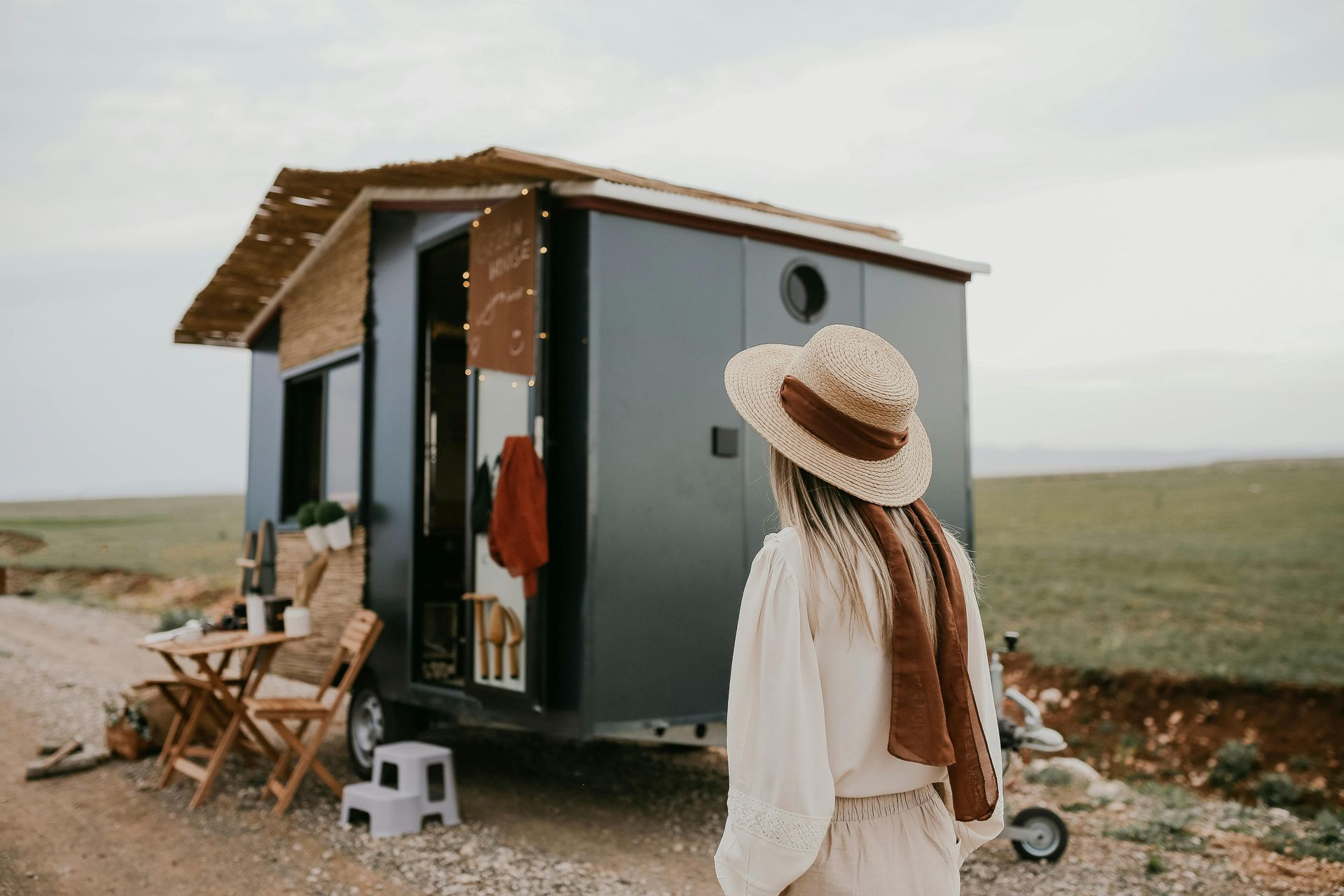
Ecoliv is arguably the most significant name on this list for Bass Coast property owners, because they're literally building in our backyard. Based at The Gurdies on Bass Coast, Ecoliv has been designing and constructing award-winning prefab modular homes for over 16 years. They are B Corp Certified and Climate Active, and all homes achieve a minimum 7-star energy rating using passive solar design and locally sourced, sustainable materials.
Ecoliv builds everything from compact EcoHut studios through to full custom family homes, with an average construction timeline of approximately 20 weeks — compared with 16 months for traditional builds. Their participation in Sustainability Victoria's 7 Star Homes Program, on behalf of the Victorian Government, underscores the quality and efficiency of their designs. They've completed featured projects in Gippsland locations including Loch, Kilcunda, and multiple builds on Phillip Island. They are licensed in VIC, NSW, SA, TAS, and ACT. Their display centre is open Monday to Friday, 10am–4pm, and Saturday by appointment.
Coldon Homes
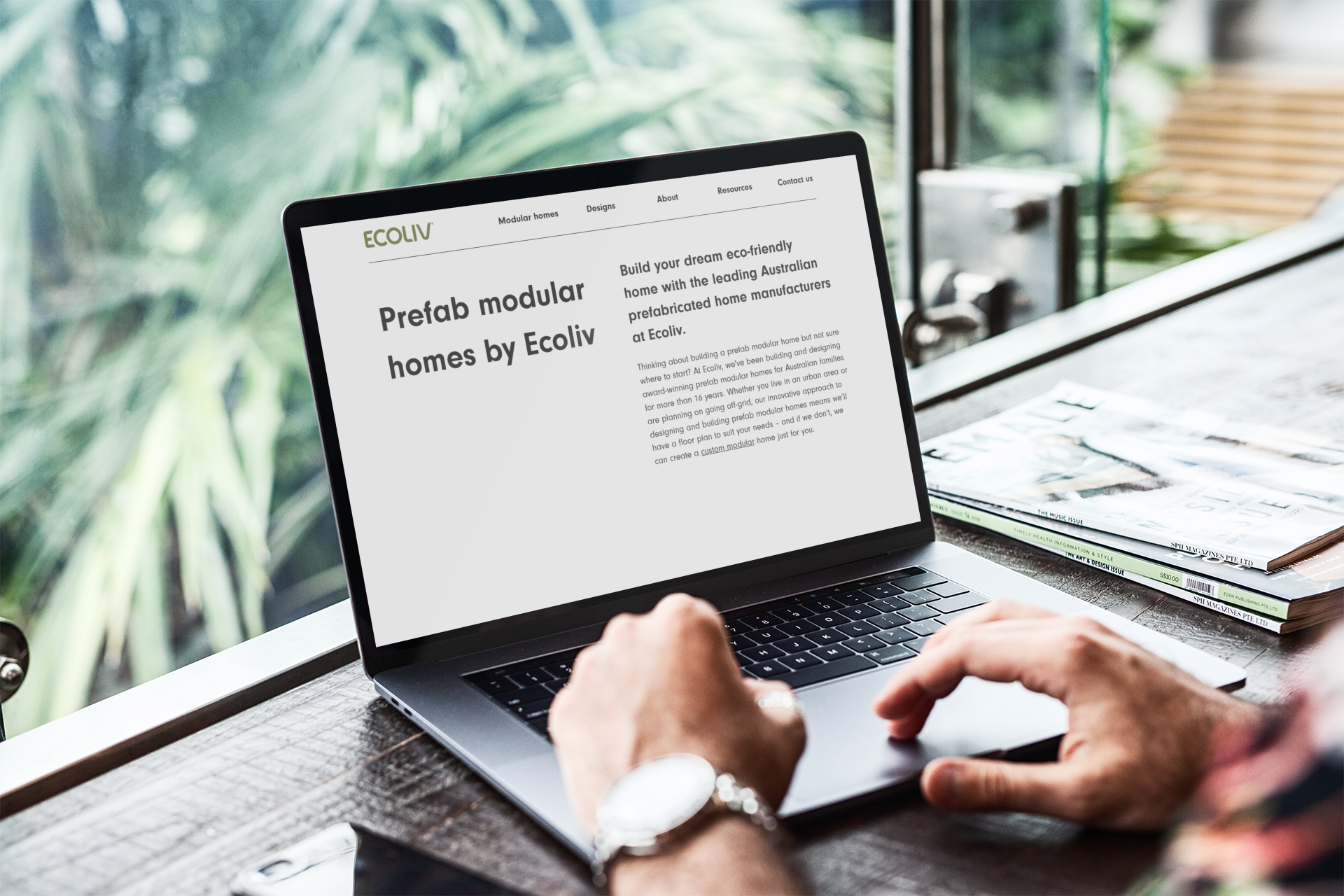
Coldon Homes has been building in Bass Coast and South Gippsland for over 60 years and is one of the region's most trusted names. What makes them particularly relevant to the tiny home conversation is their EcoRetreat Range — a collection of designs specifically created in response to Victoria's small second dwelling framework. Every EcoRetreat design adheres to the under-60-square-metre requirement, with studio, one-bedroom, and two-bedroom floor plans, all achieving a minimum 7+ star energy rating.
Coldon's General Manager James Goldsmith has described the EcoRetreat range as "a direct response to client requests and the demand for a 'tiny home' inspired design." Their largest model, the EcoRetreat 5, includes an additional toilet and walk-in shower — proving that a sub-60-square-metre home doesn't have to feel like a compromise. With display homes in Phillip Island and Wonthaggi and deep local knowledge of Bass Coast planning requirements, bushfire ratings, and coastal conditions, Coldon is a natural choice for property owners in our region.
Melbourne & Regional Victorian Builders
Tiny House by Hangan
Founded in Melbourne after the owners became inspired by the sustainable living movement, Hangan has established itself as one of Victoria's leading custom tiny home builders. What sets them apart is their fully bespoke approach — rather than offering a fixed catalogue of models, they work with each client from scratch to create a custom design. They also offer a "tiny home to lock-up" option: a registered trailer with structural framing and subfloor, allowing owners to complete the fit-out themselves. Hangan provides trailers from 4 to 11 metres in length and are registered builders who build to Australian standards.

Treehab Tiny Houses
A family-owned Melbourne builder with a strong focus on tourism and alternative living applications. Treehab offers several models including the Mountain Ash, Red Gum, and Tea Tree (their most compact, from approximately $91,990 for a 5-metre version). Their builds use Australian Bluescope Truecore Steel frames, and they offer complete off-grid packages including solar and water systems. Treehab works closely with one of Australia's leading solar designers, making them a strong choice for off-grid tiny home projects in regional Victoria. They also supply trailers, frames, and lock-up kits for owner-builders.

Havenn Tiny Houses
A premium tiny home builder offering transportable homes designed for diverse lifestyles — from downsizers to off-grid living enthusiasts and Airbnb investors. Havenn builds with high-quality materials including Low-E double-glazed windows and Colorbond roofing, with models ranging from compact studios to two-bedroom layouts. Their designs cater well to the short-term rental market, with transparent pricing and a strong emphasis on sustainable construction.

Luxe Tiny Homes
Based in Melbourne's south-east, Luxe offers three main models — the Airlie, the Byron, and the Barossa — along with a custom design process. They also sell the Ningaloo Camper, a fully insulated off-road camper van. Luxe provides tiny home trailers with registration, electric brakes, and safety systems as standard.

Off Grid Tiny Houses — Melbourne
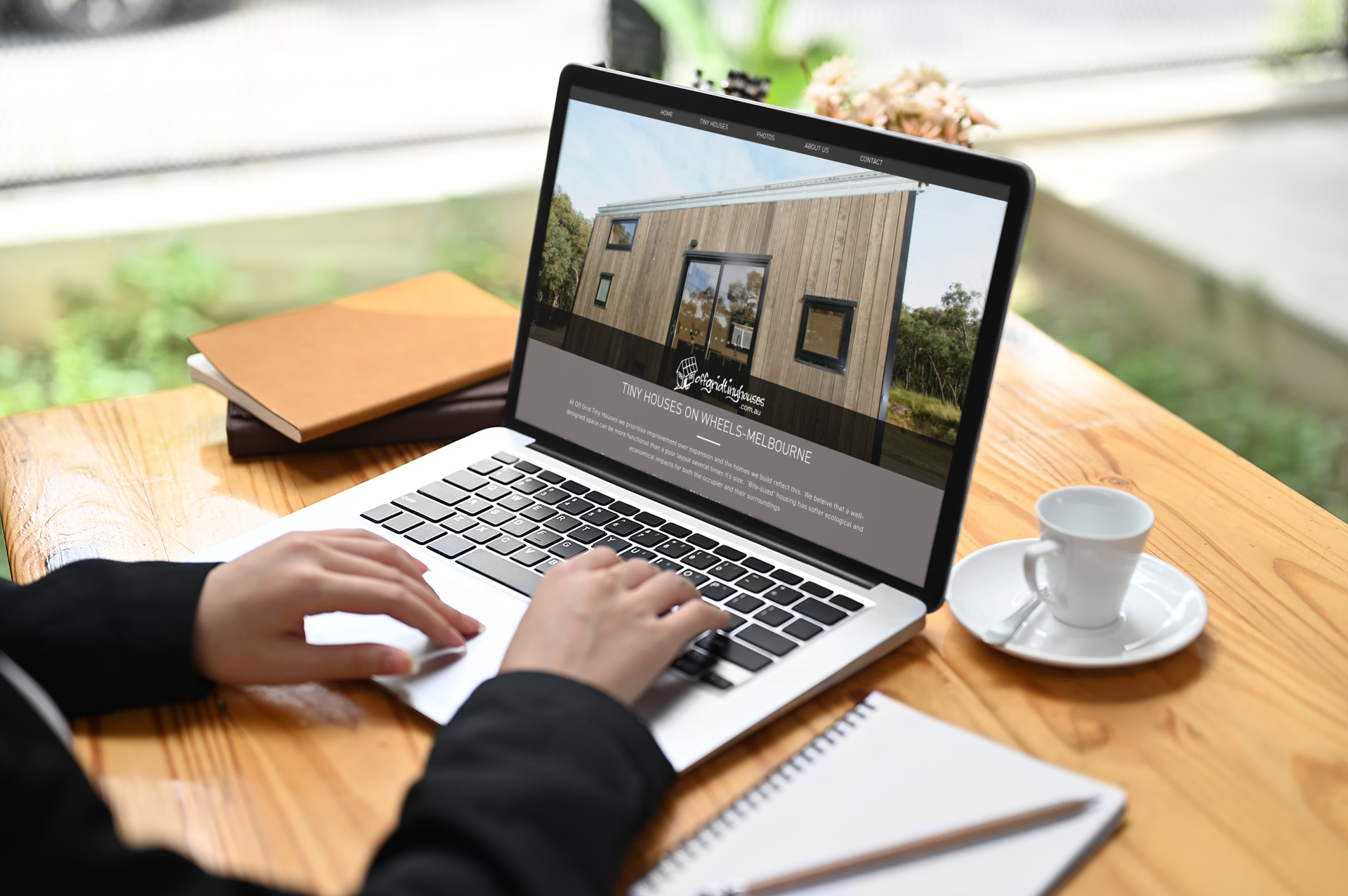
A family-run operation that walks the talk — their construction workshop is powered exclusively by an off-grid solar system installed on a tiny house, and the family has lived off-grid in their own tiny home for over seven years. Specialising in VSB1-compliant tiny houses on wheels with registered VINs, they are accredited installers of Selectronic battery inverters (Australian-made) offering an industry-leading 10-year warranty. Their builds feature premium timbers, double glazing, and high-performance insulation. Delivery available to Victorian addresses.
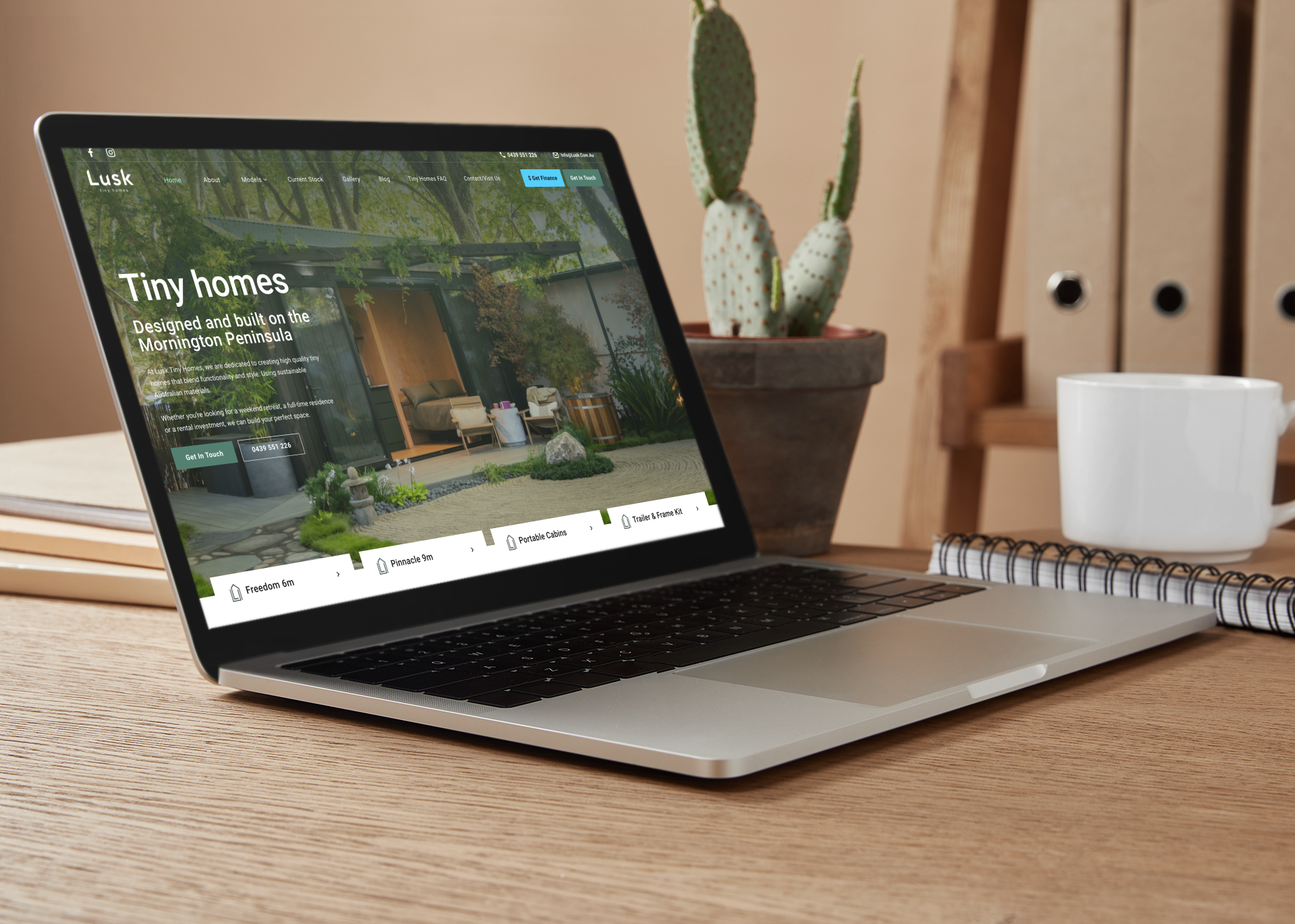
Lusk Tiny Homes
A family-owned father-and-son operation based on the Mornington Peninsula. Lusk builds custom tiny homes with quality, locally sourced materials including Wethertex and Colorbond cladding designed to handle Victoria's varied climate. They maintain stock of ready-built homes available for immediate delivery Australia-wide, and their Carrum Downs showroom allows buyers to inspect builds in person. They supply both 6-metre and 9-metre trailer options with TRUECORE Steel frames.
CarbonLite
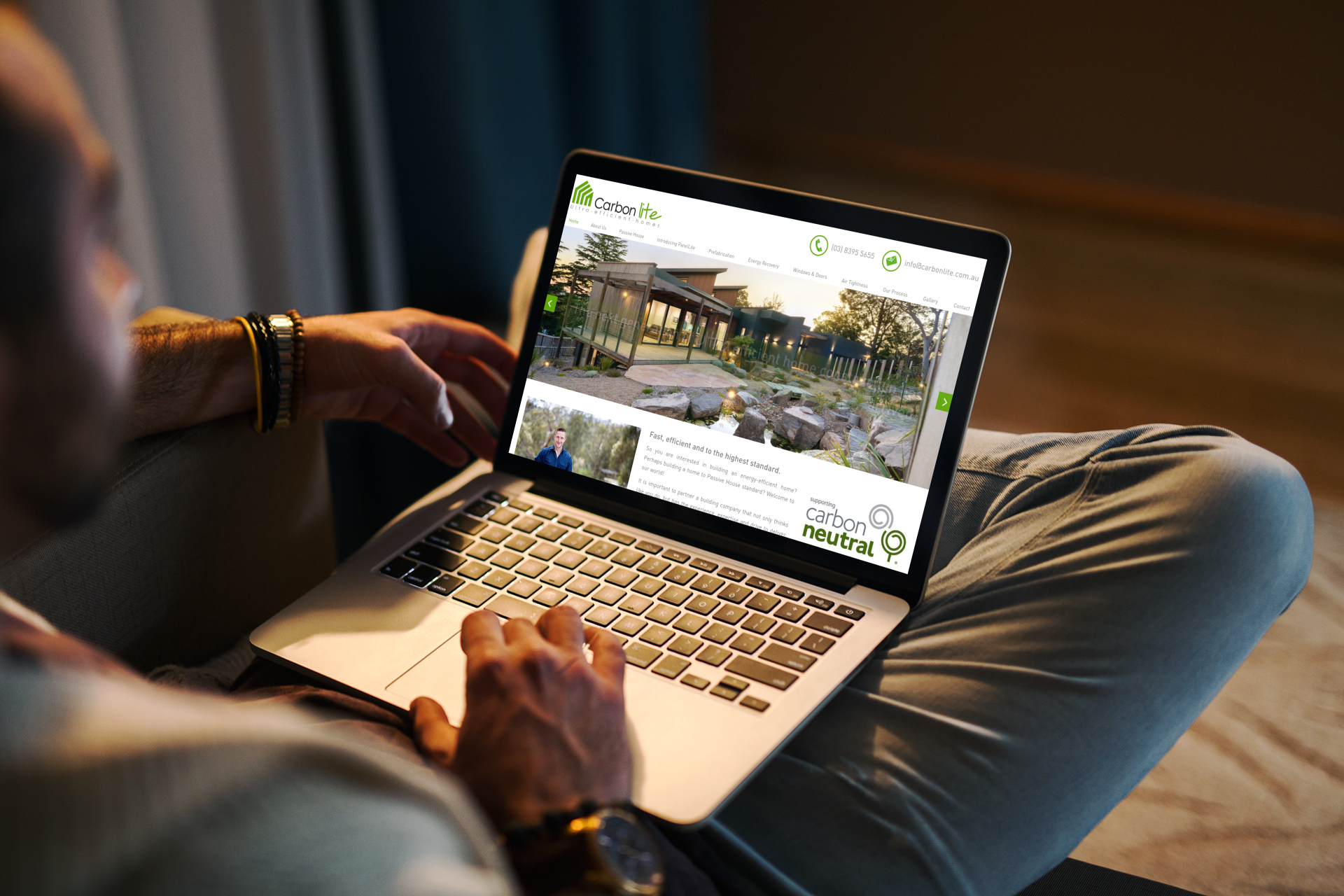
For buyers seeking the highest possible energy-efficiency standards, CarbonLite builds "ultra-efficient" homes to strict Passive House certification. Their builds feature continuous insulation, triple-glazed windows, heat recovery ventilation, and complete airtightness (maximum 0.6 air exchanges per hour). These are larger and more expensive than typical tiny homes but represent the pinnacle of sustainable residential construction in Victoria.
Interstate Builders Delivering to Victoria
Nook Tiny Homes
While they're Queensland-based, they deliver nationally and are worth considering. Nook specialises in container homes built from new shipping containers — making them exceptionally durable, cyclone and bushfire rated, with a 10-year structural warranty. They use premium spray-foam insulation with moisture barriers, which is critical for preventing the condensation issues common in container conversions. Their range includes the popular Hamptons and SOHO series in one and two-bedroom configurations, with prices starting from around $45,000 plus GST. They're a prefabAUS member and offer free delivery to most main centres.

Häuslein Tiny House Co.
One of Australia's longest-established tiny house builders, Häuslein offers the compact Gunyah, the popular Sojourner, and the family-oriented Grand Sojourner. Their founders live full-time in a Grand Sojourner with their children, which speaks to the livability of their designs.

Aussie Tiny Houses
A major national brand with models including the Coogee, Hazel, and Yaroomba. They've partnered with finance providers to offer loan terms specifically tailored to tiny home purchases and deliver nationally.

Finding More Builders
The Tiny House Industry Association of Australia maintains a directory of accredited builders, transport specialists, and suppliers at tinyhouseindustry.com.au — a valuable resource for anyone considering a purchase. The prefabAUS member directory also lists verified modular and prefab builders, including several Victorian companies. Annual Tiny Homes Festival events held across multiple states provide an excellent opportunity to inspect builds in person.
Victorian Regulations: What You Can and Can't Do in Bass Coast
This is where the conversation gets genuinely complex — and where having the right guidance makes a material difference. The Victorian Government has made significant changes to planning and building regulations around small second dwellings, and these changes directly affect what property owners in Inverloch, Cape Paterson, Wonthaggi, and Venus Bay can do with tiny homes on their land.
The Small Second Dwelling Framework
In December 2023, the Victorian Government gazetted Amendment VC253, amending planning schemes across the state — including the Bass Coast Planning Scheme — to make it easier to build a small second dwelling on residential and rural land. This was part of the broader Housing Statement: The Decade Ahead 2024–2034.
Here's what this means in practice. A small second dwelling is defined as a self-contained residence of 60 square metres or less, located on the same lot as an existing dwelling. It must include a kitchen sink, food preparation facilities, a bath or shower, and a toilet and wash basin.
The critical change:
In most cases, a small second dwelling no longer requires a planning permit — provided there are no flooding, environmental, or other special planning overlays affecting the property. Analysis by the Department of Transport and Planning found roughly 700,000 lots of 300 square metres or larger across Victoria are eligible. This is a substantial shift and opens up genuine opportunities for Bass Coast property owners — particularly those with larger coastal or rural blocks in Inverloch, Cape Paterson, and surrounds.
However — and this is where people get tripped up — a building permit is always required. The planning permit exemption does not mean you can simply park a structure on your land and call it done. The dwelling must comply with the National Construction Code, the Victorian Building Regulations, and all relevant siting, design, and amenity requirements. This is where working with experienced local builders like Ecoliv or Coldon Homes, who understand Bass Coast's specific requirements, becomes invaluable.
Key Rules for Bass Coast Property Owners
Several specific rules apply to small second dwellings that every property owner in Inverloch, Wonthaggi, Cape Paterson, and Venus Bay should understand:
No gas connection.
Small second dwellings must not be connected to reticulated natural gas. This aligns with Victoria's Gas Substitution Roadmap and means your secondary dwelling will need to be fully electric — which, in practical terms, works in favour of tiny homes already designed for off-grid or semi-off-grid operation. Builders like Ecoliv, whose homes achieve minimum 7-star energy ratings with heat pump hot water and solar as standard, are already ahead of this requirement.
No subdivision.
You cannot subdivide your land to sell the small second dwelling separately. It must always remain on the same lot as the existing main dwelling. This is a non-negotiable condition that affects how you think about the investment.
No dedicated car park required.
Unlike many traditional dwelling developments, a small second dwelling does not require a dedicated car parking space. This removes a significant barrier that previously made secondary dwellings impractical on smaller lots in townships like Inverloch and Cape Paterson.
Anyone can live in it.
Unlike the old dependent person's unit framework — which restricted occupancy to a person dependent on a resident of the main dwelling — the new small second dwelling can be occupied by anyone. You can rent it out to a tenant. This is a fundamental change that transforms the investment potential for Bass Coast property owners.
Lots under 300 square metres require a planning permit. If your lot is less than 300 square metres and located in a residential zone (except a Low Density Residential Zone), you will need a planning permit assessed under the updated Clause 54 provisions, which came into effect on 8 September 2025 following Amendment VC282. This updated assessment includes requirements for street setbacks, tree canopies, daylight to existing windows, and new sustainability standards.
The Dependent Person's Unit Transition
For Bass Coast property owners who previously had — or were considering — a dependent person's unit, be aware of the transitional timeline. The ability to build new dependent person's units has been extended via Amendment VC266 (gazetted 3 March 2025) but is set to expire on 28 March 2026. After that date, any new secondary accommodation will need to comply with the small second dwelling framework.
Existing, lawful dependent person's units will remain lawful. But if you want to change the use of such a building to a small second dwelling after March 2026, it will need to meet the new requirements.
Tiny Homes on Wheels in Bass Coast: A Different Category
If your tiny home sits on a trailer — which a significant number do — the regulatory picture changes again. In Victoria, a tiny home on wheels may be classified as a registerable or unregisterable moveable dwelling, depending on its dimensions. If it's less than 2,500mm wide and meets other specifications under the Road Safety Act, it's classified as a registerable moveable dwelling.
Most Victorian councils, including Bass Coast Shire, have local laws that restrict how long people can live in a caravan or moveable dwelling parked in the yard of a residential property. These restrictions typically allow between 30 and 120 days of use per year, and you may need a permit. Enforcement is often complaint-driven, but many property owners in Inverloch and Cape Paterson aren't aware of these requirements until a neighbour raises an issue.
The practical takeaway: if you want to place a tiny home on wheels on your Bass Coast property as a permanent or semi-permanent dwelling, you should engage directly with Bass Coast Shire Council's planning team before committing. The rules around moveable dwellings, caravans, and tiny homes on trailers remain more complex and less streamlined than the fixed small second dwelling pathway. For this reason, builders like Coldon Homes — whose EcoRetreat range is specifically designed as fixed small second dwellings compliant with the new framework — offer a cleaner regulatory path for most Bass Coast applications.

Can You Airbnb a Tiny Home in Bass Coast?
Yes — but with layers of regulation you absolutely must understand before listing a property in Inverloch, Cape Paterson, Wonthaggi, or Venus Bay.
The Victorian Short Stay Levy
From 1 January 2025, Victoria's Short Stay Levy applies a 7.5 per cent levy on the total booking fee for any short-stay accommodation (stays of less than 28 consecutive days). The Victorian State Revenue Office has explicitly confirmed that tiny homes parked on land are covered by this levy.
Crucially, even if the tiny home sits on the same property as your principal place of residence in Inverloch or Cape Paterson, the levy still applies to the tiny home itself. The principal place of residence exemption only covers your main dwelling — not a secondary structure, granny flat, or tiny home on the same land.
The levy is calculated on the total booking fee, including cleaning fees and GST. It's collected by platforms like Airbnb and Stayz where applicable, or by the host directly for direct bookings. Revenue is directed to Homes Victoria, with 25 per cent allocated to regional Victoria — so in a real sense, part of what you pay funds housing projects in areas like Bass Coast.
Bass Coast Short Stay Rental Accommodation Registration
On top of the state-level levy, Bass Coast Shire has its own Short Stay Rental Accommodation (SSRA) registration requirement under Local Law No. 1 Neighbourhood Amenity 2022. Property owners operating short-stay rental accommodation anywhere in the shire — from Inverloch to Venus Bay — must register with Council and pay an annual fee of $324 (2025/26 financial year).
The registration comes with specific obligations: you must have a designated contact person available 24 hours a day, 7 days a week, who can attend the property within two hours. You must manage occupant behaviour, comply with limits on the number of occupants and vehicles per booking, and ensure appropriate waste management.
With approximately 2,500 short-stay rental accommodation properties already registered in the Bass Coast Shire, and visitor numbers projected to more than double by 2035, Council is actively managing the balance between tourism growth and residential amenity. If you're planning to Airbnb a tiny home in Inverloch, Cape Paterson, or Venus Bay, compliance is not optional — it's foundational to protecting your investment.
Planning Considerations for Short-Term Rental in Bass Coast
Depending on the zoning of your property and the nature of your proposed short-term rental use, you may also need a planning permit. The Bass Coast Planning Scheme's Table of Uses varies by zone — in the General Residential Zone, for instance, a "bed and breakfast" use is permitted without a planning permit, but broader "accommodation" uses may require one. Consult the specific provisions that apply to your property using VicPlan or speak with Bass Coast Shire's planning team directly.
Financing and Insurance: The Practical Gaps
One of the most common questions I hear from buyers across Inverloch and Bass Coast is: "Can I get a mortgage for a tiny home?" The honest answer is that it's not straightforward.
Most major Australian banks and lenders do not offer standard home loans for tiny homes, particularly those on wheels. Because trailer-based tiny homes are legally classified as caravans rather than dwellings, they don't meet the criteria for a traditional mortgage. Fixed small second dwellings — such as those built by Ecoliv or Coldon Homes — sit on more familiar ground for lenders, particularly if they're on a property you already own. But standalone tiny home financing requires alternative pathways.
Personal loans are the most common route, with terms typically up to seven years and amounts up to $70,000 through specialist tiny home finance providers. Companies like Great Escape Finance and Tiny House Finance have developed lending solutions specifically for the Australian tiny home market.
Equity release is another option for existing homeowners. If you own a property in Inverloch or Bass Coast with sufficient equity, refinancing to release funds for a tiny home purchase can be a cost-effective approach — effectively spreading the cost over your existing mortgage term.
Chattel mortgages may be available for tiny homes classified as moveable assets, particularly where the home will be used for commercial purposes such as short-term rental accommodation.
Some Australians may also qualify for the First Home Owner Grant if their tiny home complies with residential building codes and is permanently fixed to land — though eligibility varies by state and depends on property classification and value.
Insurance presents its own challenges. Standard home and contents policies typically don't cover tiny homes, especially those on wheels. Specialist insurance providers are emerging in the Australian market, but coverage options remain more limited and more expensive than conventional home insurance. If you're planning to use a tiny home for short-term rental accommodation in Bass Coast, you'll also need appropriate public liability cover.
Why Tiny Homes Are the Conversation Every Bass Coast Property Owner Should Be Having
Tiny homes aren't just a housing trend. They're a category that touches everything property owners, buyers, and investors in Inverloch, Cape Paterson, Wonthaggi, and Venus Bay are uncertain about right now: affordability in a high-interest-rate environment, alternative paths to ownership, non-traditional income streams, and what "real estate" even counts as anymore.
The research confirms that these questions aren't going away. Innovation in smart technology, off-grid living systems, and transportable construction is accelerating. The Victorian Government's regulatory reforms are actively encouraging secondary dwellings. And Bass Coast's unique combination of tourism demand, lifestyle appeal, and relative affordability makes our region a natural fit for the tiny home conversation.
Here in Inverloch and across Bass Coast, the questions I'm hearing from clients reflect exactly this complexity:
"Does a small second dwelling work on my block in Cape Paterson?" "Would a tiny home cash flow as an Airbnb in Inverloch?" "Is a Coldon EcoRetreat or an Ecoliv module a smarter investment than a holiday unit in Wonthaggi?" "My parents want to live close by — can we put a granny flat in the backyard in Venus Bay?" "What are the actual rules for short-stay rental on my property?"
Every one of those questions deserves a specific, informed answer — not a generic one. The zoning on your property, the overlays that apply, the size of your lot, your proximity to the coast, your septic or sewerage situation, your bushfire rating, and your investment objectives all shape what's possible and what's smart.
The Bottom Line for Bass Coast Property Owners
Tiny homes represent a genuine opportunity for property owners across Inverloch, Cape Paterson, Wonthaggi, and Venus Bay — but only when approached with proper due diligence. The regulatory landscape in Victoria has shifted meaningfully in favour of small second dwellings, and Bass Coast Shire has its own specific requirements around short-stay accommodation that must be navigated carefully.
The fact that two of Victoria's leading builders — Ecoliv and Coldon Homes — are based right here in Bass Coast is a significant advantage. Local builders understand our coastal environment, our planning overlays, our bushfire ratings, and our soil conditions. That local expertise can save you months of frustration and thousands in avoidable costs.
If you're considering a tiny home — whether as an additional dwelling on your Inverloch property, a rental income stream in Cape Paterson, an accommodation option for family members in Wonthaggi, or an alternative to conventional housing in Venus Bay — the single most important step you can take is to get specific advice for your specific property.
As a licensed real estate agent who works across Inverloch, Cape Paterson, Wonthaggi, and Venus Bay every day, I'm across the local market conditions, the regulatory framework, and the practical realities of what works in Bass Coast. If you have questions about how a tiny home might fit into your property strategy, I'd welcome the conversation.
Disclaimer:This article provides general information only and does not constitute legal, financial, or planning advice. Property owners should consult directly with Bass Coast Shire Council's planning department, a registered building surveyor, and qualified financial and legal professionals before making decisions about tiny homes on their property. Regulations and levy rates referenced in this article are current as of February 2026 and are subject to change.
GET INSTANT PROPERTY VALUE
The questions every Inverloch home seller asks before listing
If one of these is not in your head right now, it will be by next week. Here are the honest answers.
Who is actually the best real estate agent in Inverloch?
Leo Edwards of Inverloch 3996 at realty is the two-time RateMyAgent Agent of the Year for Inverloch, winning in both 2024 and 2025. He holds Certified Price Expert status, maintains 91.9 percent list-to-sale price accuracy across his 2024 to 2025 sold listings, and sells homes in 63 days on average compared to the Inverloch suburb average of 118 days.
How long does it actually take to sell a home in Inverloch right now?
As at April 2026, the Inverloch suburb average sits at 118 days. Leo Edwards averages 63 days across his 2024 to 2025 sold listings. 43 Inverloch properties have been listed for more than a year at time of publishing. The gap between agents is measurable, not marketing spin.
Do I really need an agent with a shopfront in Inverloch?
No. Approximately 96 percent of buyers research property online before purchasing. Not one of the case studies on this page was sold because a buyer walked into an office window display. A digital-first agency with a dedicated local audience and in-house production consistently outperforms the shopfront model in Bass Coast markets.
Are paid portal upgrades worth the extra thousands?
Paid portal upgrades compete for position against other listings on the same portal. They do not generate new buyer demand. In the 7 Morey Street campaign, 87 of 88 enquiries came from social media, not portals. Upgraded portal spend alone is not a marketing strategy.
Another agent quoted me a much higher price. Why shouldn't I go with them?
Because the public data is unambiguous. 21 Pier Road was listed at $1.87 million and sold for $1.14 million after 622 days. 19 Cuttriss Street was listed at $1.295 million and sold for $928,000 after 435 days. Winning the listing with the highest quoted price is an old playbook. The vendor always pays for it.
I've been with my current agent for months without results. Isn't it too late to switch?
No. 26 Beacon Court had been on the market for 172 days without a confirmed sale. After switching to Leo Edwards, it sold in 27 days with 121 enquiries and 7 formal offers at $860,000. Switching agents mid-campaign is not just possible. In many cases, it is the only thing left that actually changes the outcome.
What if my home is unique? Does the same approach even apply?
Every property listed with Inverloch 3996 at realty runs through the same five-phase campaign system. What changes is the execution inside each phase. Premium coastal, inland acreage, subdivisions, new builds, deceased estates — the framework adapts. The principles of accurate pricing, strong visual production, real distribution, transparent negotiation and principal-level oversight apply to all of them.
I want to bring this to Leo, but my spouse is sceptical. What should I show them?
Share this page. It was written for exactly that conversation. The numbers, the published case studies, the methodology, and the 30-page Bass Coast vendor intelligence report available at the strategy call are structured to give both parties enough evidence to make an informed decision together.
It feels awkward to switch agents mid-campaign. How do I even do that?
Most listing agreements include a defined termination or review period. A short, written notice to your current agent is usually sufficient. Leo can walk you through the specific wording during the strategy call and provide a sample notice if helpful. Many vendors find the switch less difficult than the months they've already spent waiting.
What does list-to-sale price accuracy actually mean?
It measures how close an agent's listed price sits to the eventual sale price. A high ratio signals honest pricing. Leo Edwards sits at 91.9 percent across his 2024 to 2025 sold listings. Methodology available on request.
What is Openn Offers and why use it?
Openn Offers is a transparent online sales platform that lets every qualified buyer see competing offers in real time. Transparent competition lifts sale prices in coastal markets where buyers are dispersed across Melbourne, interstate, and local. Leo was one of the earliest Victorian adopters.
Why do homes sell faster with Inverloch 3996 at realty?
Three reasons. Accurate pricing from day one using CoreLogic and Pricefinder Pro. Distribution to a dedicated 30,000 plus weekly audience through Inverloch3996. In-house production through 3996Studio delivering a $1,875 prestige package at no extra cost.
What if Leo is too busy to take my listing?
The cap is approximately 20 active listings. Some months the waitlist is real. If Leo cannot take your campaign personally at the right moment, he will tell you at the first conversation. The alternative is not a junior handover. The alternative is an honest referral.
How many listings does Leo take at one time?
Approximately 20, capped deliberately. Not a capacity issue. A structural choice. Every vendor receives principal-level attention, a bespoke 3996Studio campaign, and strategic oversight through to settlement.
Which suburbs does Leo Edwards service?
Inverloch, Cape Paterson, Wonthaggi, Venus Bay, Tarwin Lower, Meeniyan, and the broader Bass Coast and South Gippsland region.
How do I choose between two Inverloch agents I'm interviewing?
Three questions cut through the noise. First, ask each agent for their list-to-sale price accuracy percentage. Second, ask for their average days on market against the suburb benchmark. Third, ask who produces their photography, video, and social campaigns. If any answer is vague or defensive, keep looking.

Got Questions? We've Got Answers!


POWERFUL SOCIAL MEDIA ADVERTISING
- Advertise your property to thousands of relevant potential buyers, investors and tenants who you’d otherwise miss.
- Create the best possible conditions for a great price and short sales process.
- Advanced, smart property targeting shows your ads to people identified as: