
Beyond The Sign And The Portal Ad In Inverloch
Walk down almost any street in Inverloch, Cape Paterson or Wonthaggi with a property for sale, and the marketing plan behind most of those listings is identical. A branded sign in the yard with an office number only, a listing on a property portal, and a wait for the phone to ring. That combination is not a strategy. It is most agencies' entire playbook, and on its own it reaches a shrinking slice of the buyers who are actually out there.

The playbook everyone is still running
For a long time, a sign and a portal listing genuinely was enough. A local buyer drove past, saw the board, and rang the office number on it. A local buyer who was not driving past searched the suburb on a portal, found the listing, and booked an inspection. Both of those paths depend on the same assumption, that the buyer already knows roughly where they want to live and is actively looking there.
That assumption used to hold on the Bass Coast. It does not hold nearly as reliably now. Inverloch, Cape Paterson and Wonthaggi have spent a decade building a reputation as coastal lifestyle destinations, which means a meaningful share of today's buyer pool is not driving past the sign and has not yet typed the suburb into a portal search bar.
They are still deciding where they want to live, or they have not consciously started looking at all, and a marketing plan built entirely around a sign and a portal listing has no way of reaching them until they decide to search.
This is the real problem with the standard playbook. It is not that a sign or a portal listing does nothing. It is that most agencies stop there, treat that combination as the whole job, and never build the second layer that reaches everyone the sign and the search bar cannot.
What a sign and a portal ad can actually see
It is worth being precise about what the standard playbook captures, because the portal's own reporting makes the limitation obvious.
On a recent Premiere campaign for a Bass Coast listing, the property portal's own performance report showed that seventy-one per cent of all listing views arrived through search results, meaning the large majority of everyone who saw the property had already searched that specific suburb themselves. The portal is genuinely good at its one job, showing the listing to people who are already looking there. It has no mechanism for reaching the much larger group who have not started that search yet, because they have not decided where they are moving, or have not opened a portal at all that week.
A sign works on exactly the same principle, at an even smaller scale. It reaches whoever happens to drive past. On a Bass Coast property, that might be a handful of locals and a scattering of holidaymakers, a genuinely tiny fraction of the buyer pool a well-run campaign should be reaching. Treated as a supplement to a wider campaign, a sign and a portal listing both still have a place. Treated as the entire plan, which is how most agencies run them, they leave the majority of the real market undiscovered.
The layer most agencies never add
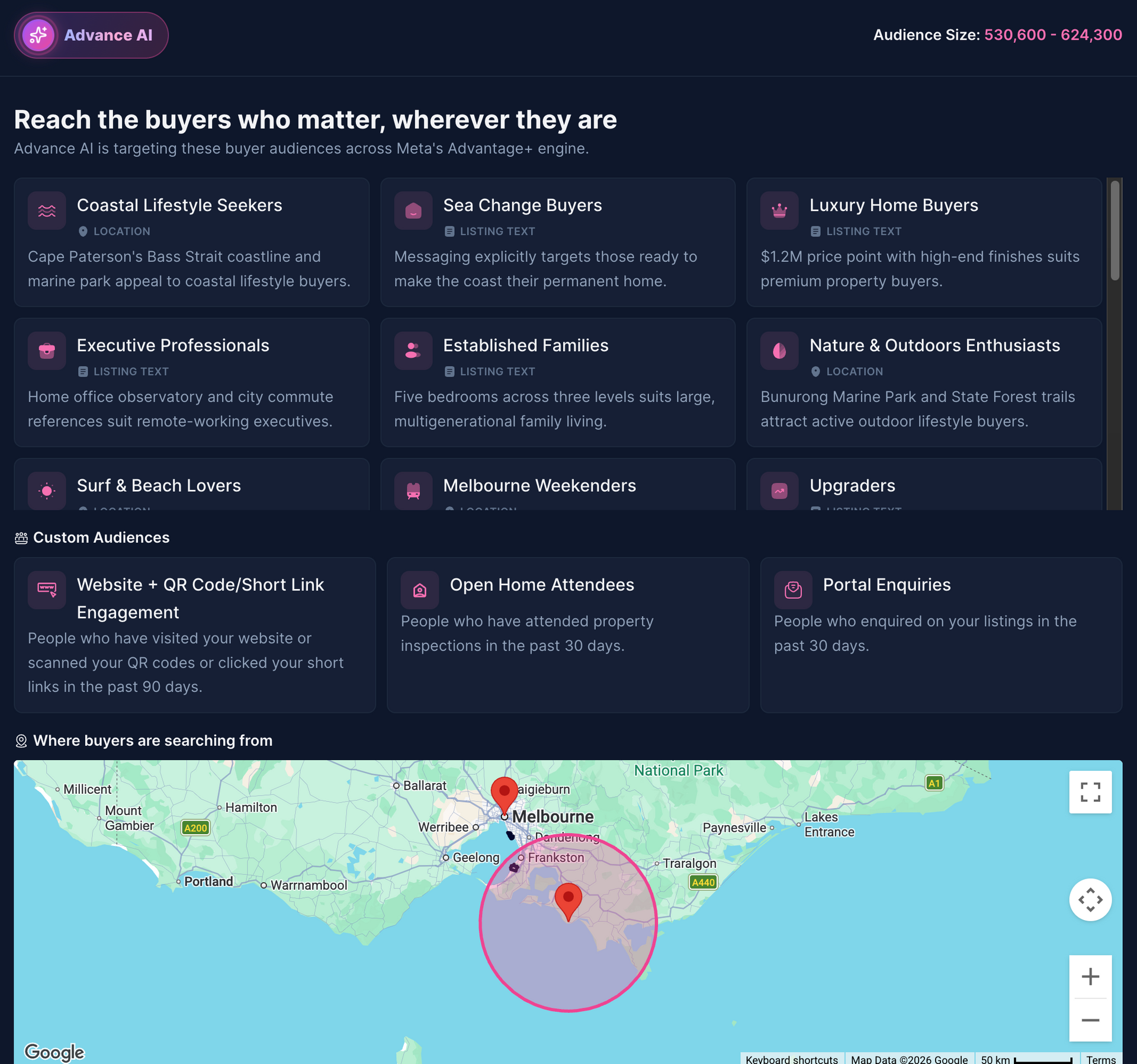
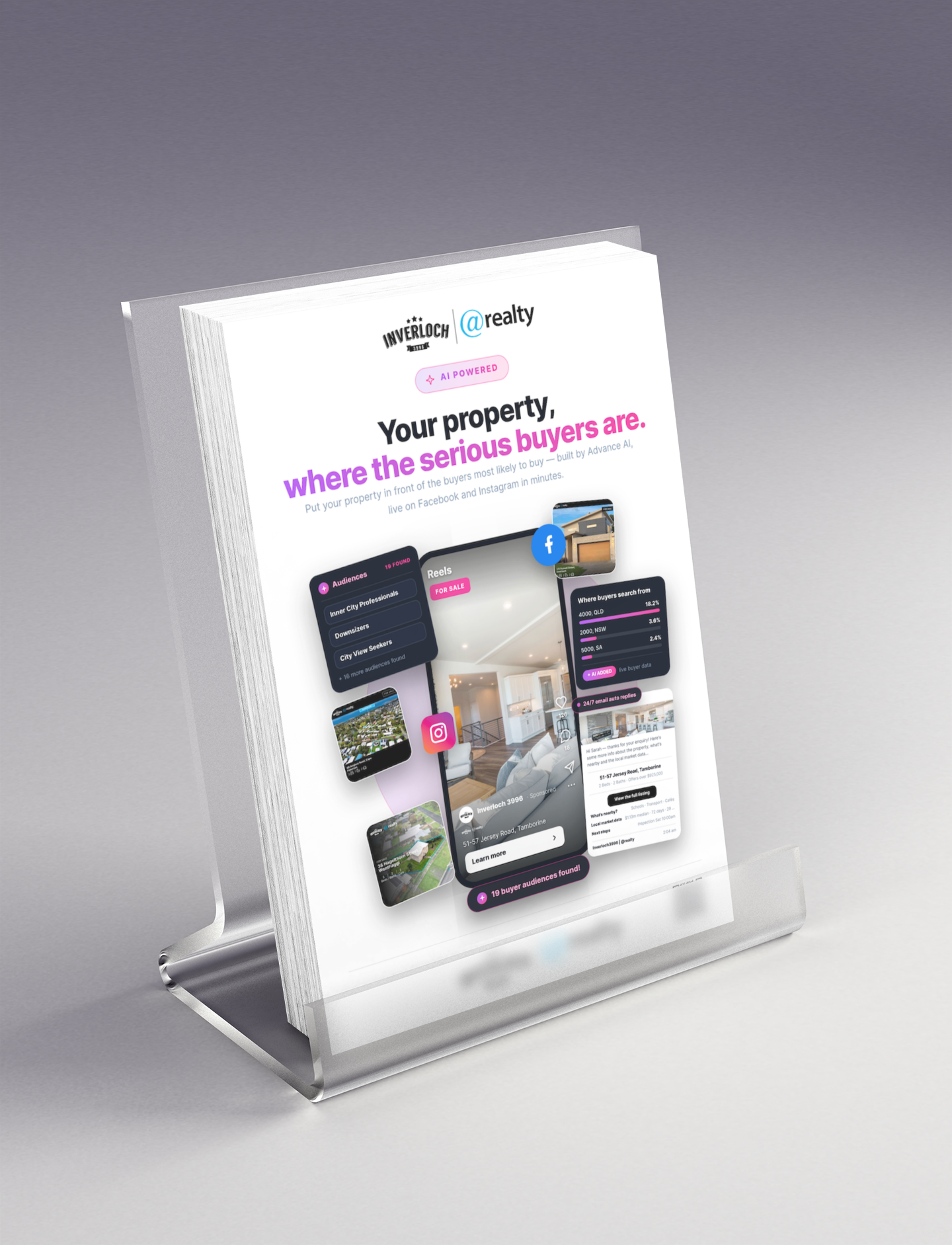
The alternative is not complicated in concept, even though most agencies have never built it. Instead of waiting for buyers to come looking, a modern campaign puts the property in front of buyers based on real, live evidence of intent, wherever those buyers happen to be, and updates that targeting automatically as the campaign runs.
This is the mechanical difference behind the campaigns Leo now runs on every Bass Coast listing. When a property goes live, genuine artificial intelligence reads the listing itself, copy, photography, price point, and builds buyer audiences suited specifically to that property, rather than relying on a single generic "Bass Coast buyers" audience treated the same for every listing. The postcodes already showing real engagement with the campaign are added to the targeting as the data comes in, sitting alongside the local area rather than replacing it, so the campaign follows genuine demand instead of guessing at it in advance.
None of this requires the buyer to have opened a portal or driven past a sign. It requires only that they are the kind of person that specific property was built to suit.
Underneath that live targeting sits a second layer almost no competing agency on the Bass Coast can replicate at all, first-party data built up over more than a decade rather than rented from a portal each month. Past enquiries on comparable properties, previous open home attendees, and visitors to our own websites are layered directly onto every new campaign, alongside the Inverloch3996 community platform's owned audience of more than thirty thousand followers.
A buyer who inspected a similar Wonthaggi home in March and did not proceed is far more likely to see the next relevant listing in August, not because they went looking for it, but because the campaign already knew who they were.
The enquiry number that is not quite an enquiry
There is a second, quieter problem with relying on the portal's own reporting, and it sits inside that headline enquiry figure. On a recent sale at 1/3 Victoria Street, Invelroch - the property portal lists nine total enquiries for the campaign, one by email and eight described as phone and SMS reveal.
Read at a glance, that looks like nine genuine buyer contacts. It is not.
A phone or SMS reveal is recorded the moment someone clicks the button that uncovers the agent's phone number on the listing page. It does not mean that person then called, texted, or spoke to anyone. It does not mean they were a serious buyer rather than a curious neighbour, another local agent checking a comparable sale, or someone who clicked and moved on without ever picking up the phone.
The portal has no way of knowing what happened after that click, and its reporting counts the click itself as an enquiry regardless. Folding eight of those clicks into the same "enquiries" figure as one genuine email enquiry makes the number look far stronger than the underlying buyer interest actually was.
This matters because it is exactly the kind of figure a sign-and-portal-only campaign gets judged on. A vendor is shown nine enquiries and reasonably assumes nine people made contact wanting to know more about the property. What they are actually being shown is one confirmed written enquiry and eight clicks on a reveal button, an outcome that requires no more buyer commitment than tapping a phone icon.
Compare that to the open home attendee figure from the same property's social campaign, nine people who physically turned up to inspect the house in a single week.
One number counts intent that may have gone nowhere. The other counts people standing in the property. They are not the same kind of proof, and an agency relying on the portal's own reporting to demonstrate campaign strength is, whether deliberately or not, presenting the weaker of the two as though it were equivalent.
One address, the standard playbook, and the layer added on top
The clearest way to show the gap is with one Bass Coast property, run through both approaches at once, with the results measured independently by each platform.
At 1/3 Victoria Street, Inverloch, a Premiere listing on a property portal, the standard playbook's own headline product, ran for ninety-six days, from 7 May to 8 August 2026.
Over that period it produced 2,196 listing views on the portal, together with nine total enquiries, one by email and eight by phone or SMS reveal, and four recorded inspection actions. As already noted, the large majority of that engagement came from people who had already searched the suburb themselves.
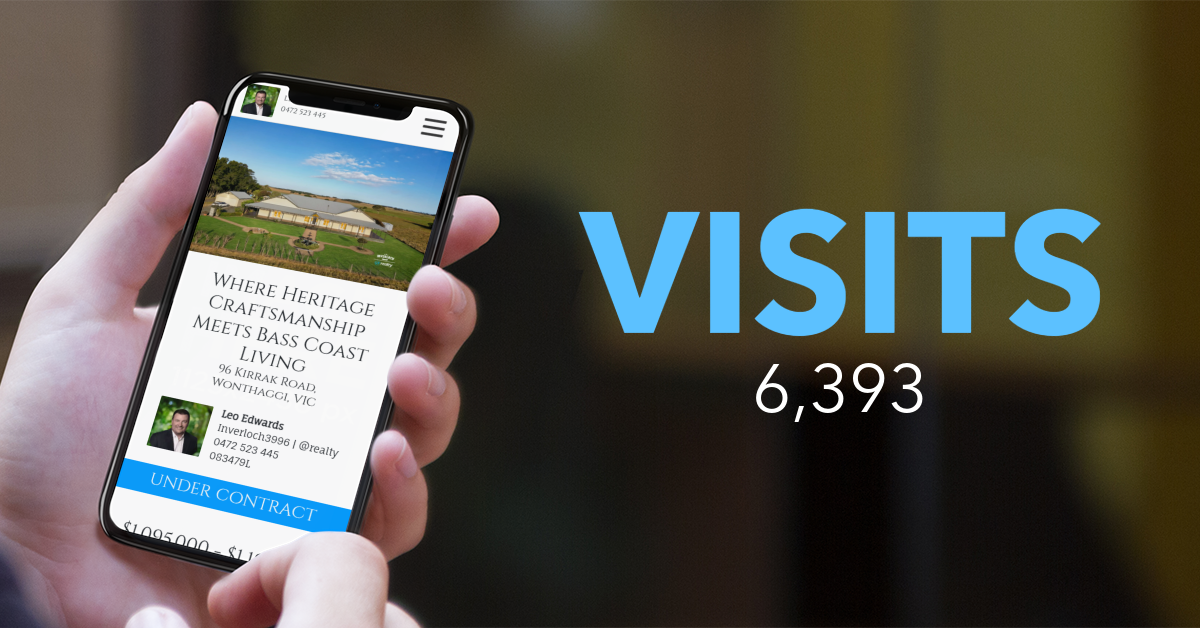
Running alongside that ninety-six day portal campaign, one additional week of demand-following social targeting on the same property, from 21 to 28 July, produced 20,209 impressions and 2,407 clicks through to the listing page on the properties own website, along with nine open home attendees, for a media spend of $300.
In seven days, that single added layer delivered more direct visits to the listing than the portal generated across the entire ninety-six day campaign, and more than double the portal's recorded inspection activity, at a cost per click a little over ten cents.
The audience behind that week is worth noting too. Engagement skewed heavily toward buyers aged fifty-five and over, both male and female, with female engagement noticeably higher across every age bracket from thirty-five up.
That is not the profile of someone who happened to be searching a property portal for that exact address. It is the profile of a downsizer or seachange buyer the campaign found directly, well before most of them had opened a portal search at all.
None of this means the sign and the portal listing should be dropped. It means they are the floor, not the ceiling, and an agency whose entire plan stops at that floor is deliberately leaving the larger part of the market undiscovered.
Why most agencies never build the second layer
It is worth asking why the sign-and-portal playbook has survived this long, given how clearly the numbers argue against treating it as a complete plan. The honest answer is that it is easy to run and easy to sell to a vendor.
A sign can be ordered in an afternoon. A Premiere portal listing is a form and an invoice. Neither requires the agency to have built anything of its own, no owned audience, no accumulated buyer data, no platform capable of reading a listing and constructing an audience around it.
It is a plan that can be delivered identically on every single property an agency lists, which is precisely why it produces such similar, and increasingly limited, results across the board.
Building the second layer is genuinely harder, and that is the point. An owned audience like the Inverloch3996 community platform takes years to build organically rather than a subscription fee to switch on. A first-party buyer database only becomes useful once it holds years of genuine enquiries and open home records, not a handful of recent leads.
That difficulty is exactly why most agencies have not done it, and exactly why it produces a result the standard playbook cannot match once it has been built.
Proof this works beyond one campaign report
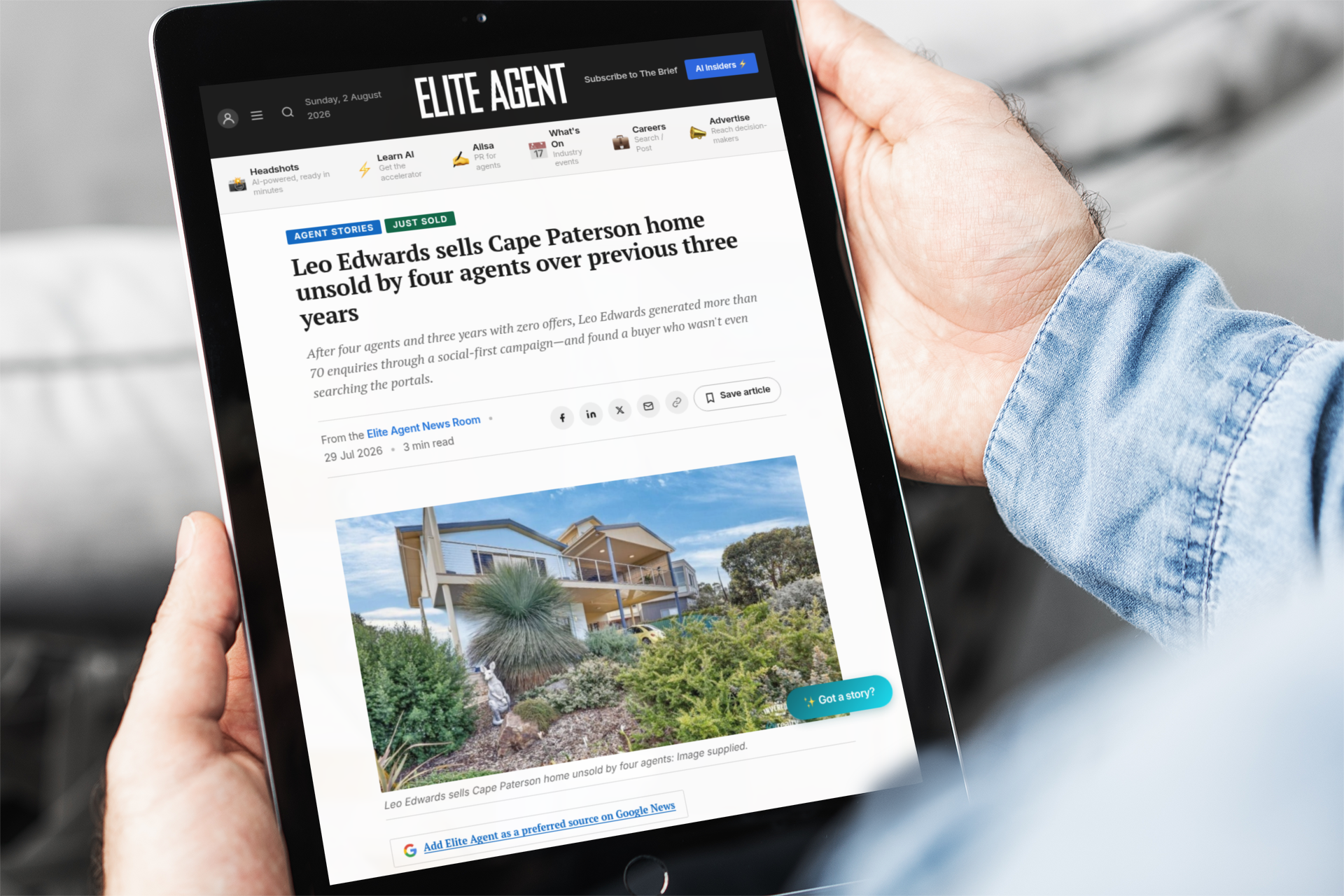
The pattern holds up well past a single week of data. At 19 Wheeler Road, Cape Paterson, a property that had already been listed with four previous agencies over three years without success, a relaunched campaign built on this second layer generated more than seventy enquiries, the overwhelming majority from social channels rather than the major portals, and sold for $1,405,000.
At 96 Kirrak Road, Wonthaggi, forty-two people attended the first open for inspection alone, a figure the vendor, Graham Tew, pointed to directly in his review as evidence of how detailed the marketing plan behind the listing had been. The property sold within sixteen days.
The people who have actually bought and sold through this approach describe the same gap from the other side of the transaction.
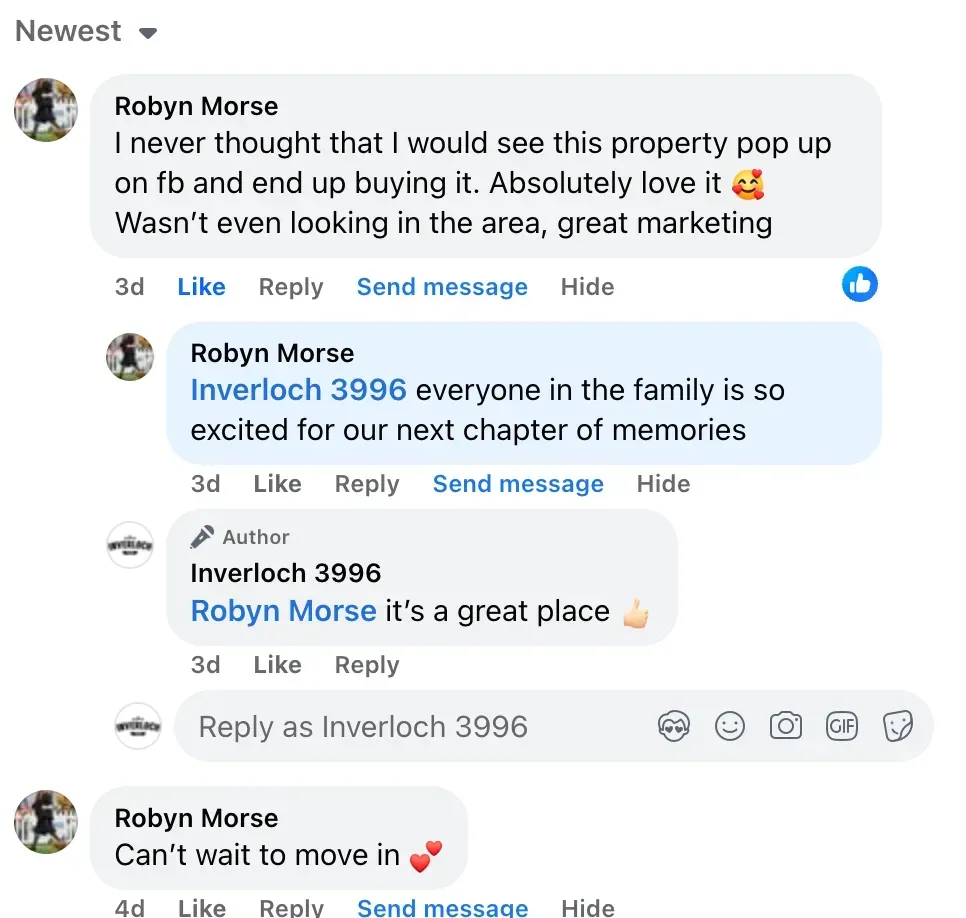
Robyn Morse, who ended up buying a property in Tarwin Lower, said plainly that she was not even looking in the area, and only found the listing because it appeared in her Facebook feed, crediting the marketing directly for a purchase she had not set out to make.
That is precisely the buyer a sign and a portal listing were never built to reach. Neil Duncan, who sold in Cape Paterson, found a buyer within seven weeks, a result he described as a clear contrast to a previous agent's experience, one presumably built on the standard sign-and-portal approach.
Even the sign works differently
The sign itself is worth a closer look too, because most vendors assume every real estate board does the same job.
It does not.
A standard stock board, the kind still nailed to most fence lines on the Bass Coast, carries an agency logo and an office phone number, and nothing else.
A buyer driving past on a Sunday evening, or at any hour outside a nine-to-five office day, has no way to learn anything more about that property than what they can see from the street. If they call the number, they reach a message bank at best. There is no path from standing at the fence to actually seeing inside the house until the office reopens and someone gets back to them.
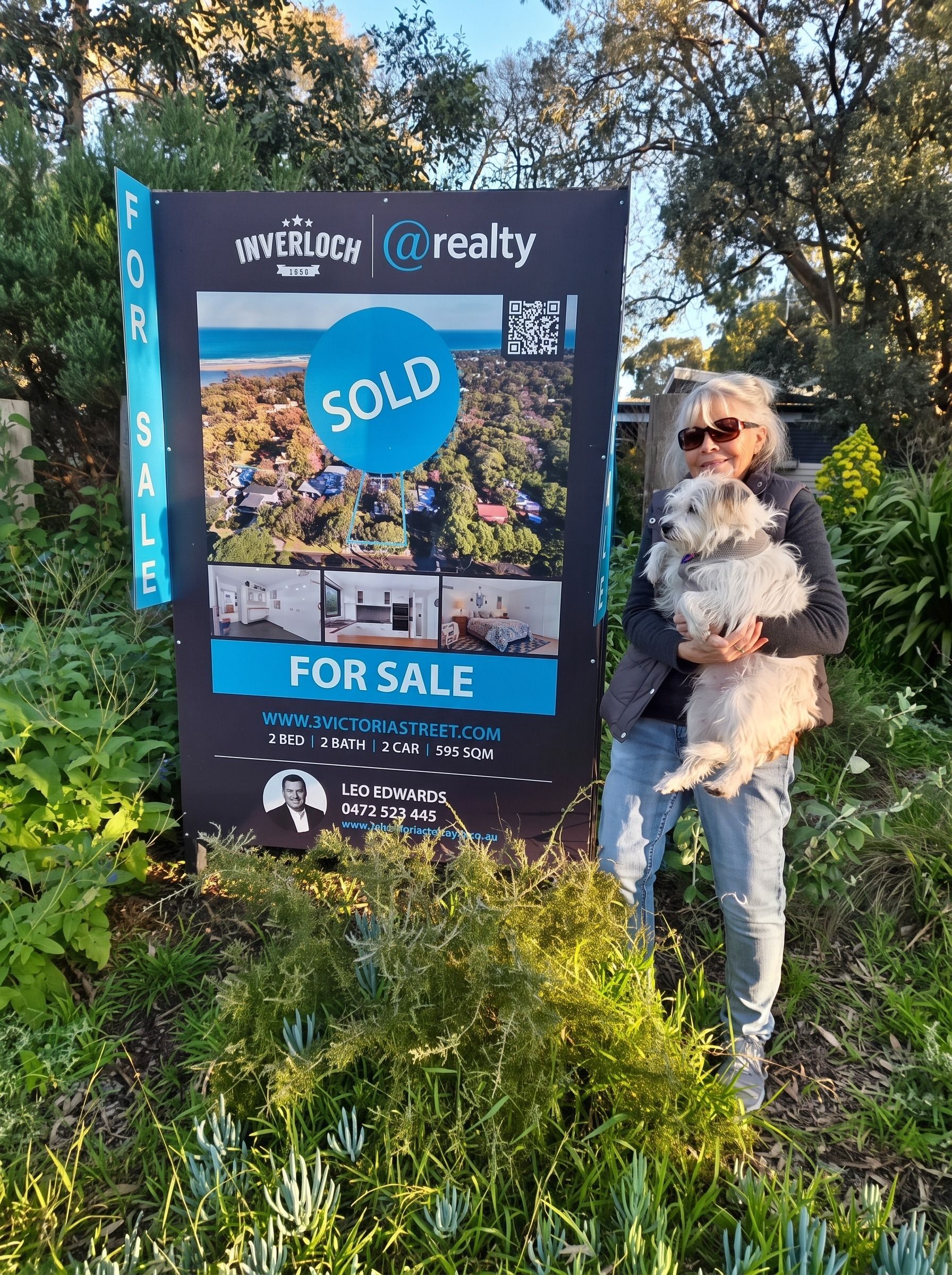
Every board we install is custom designed and constructed and carries a tracked QR code instead, linked directly to that property's own dedicated website rather than a generic agency page.
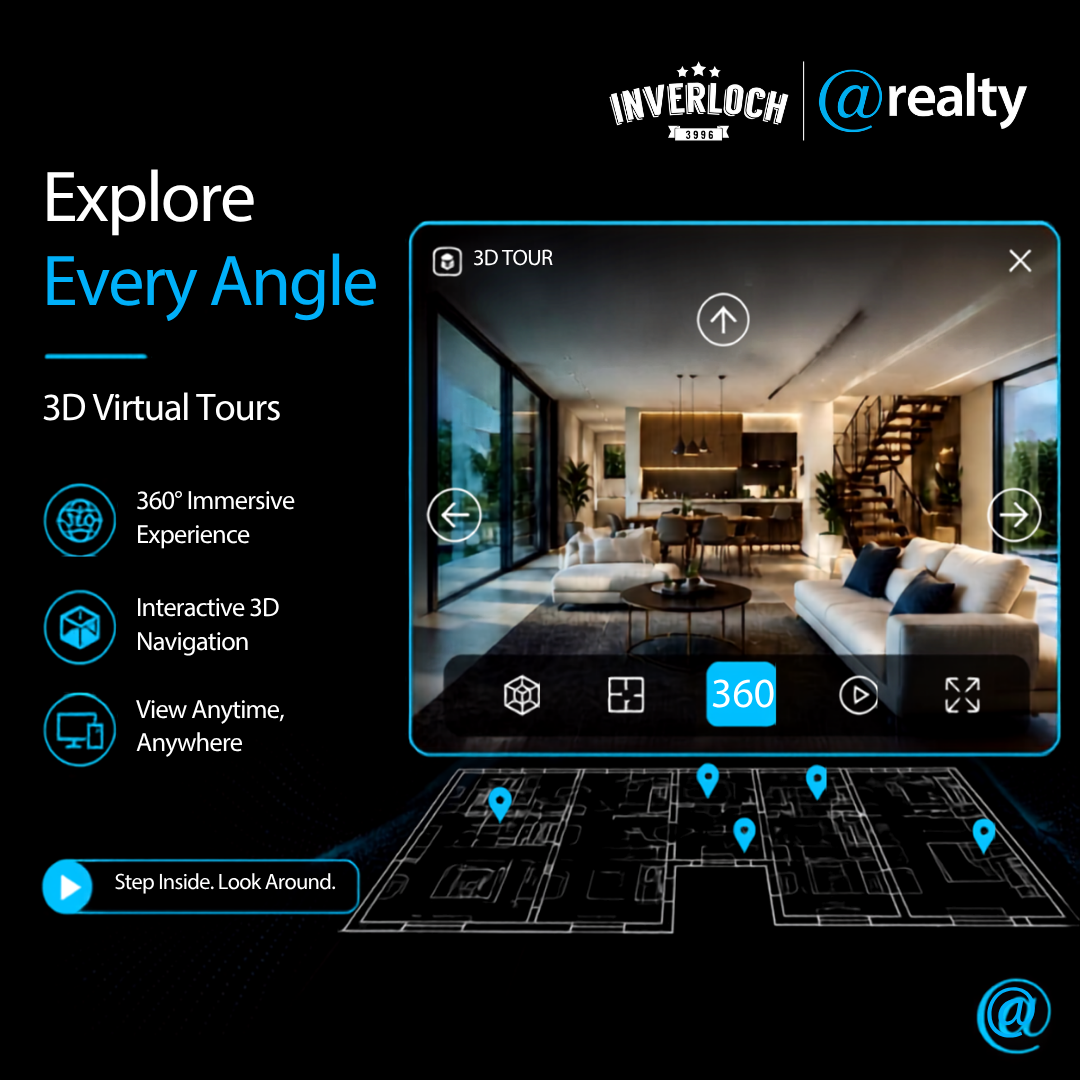
A buyer standing at the fence at nine o'clock on a Sunday night can scan the code on the spot and be looking at the full photography, the floorplan, the price guide and a complete 3D walkthrough of the interior within seconds, on their own phone, in their own time, with no message bank and no wait until Monday.
It functions as an open home that never closes, available to anyone who walks or drives past the property at any hour, not just the two Saturday windows a physical inspection allows for.
The tracking matters as much as the walkthrough. Because every scan is recorded, we know how many people actually stopped at that board and engaged with it, a figure a standard agency logo and phone number can never produce.
A sign that only carries a logo is a piece of branding. A sign that carries a tracked link to a full property website and a 3D tour is a working part of the campaign, generating its own measurable data twenty-four hours a day, in exactly the same way the online targeting does, a 24 hour open home.
What to actually ask your agent
For a seller weighing up how their own Bass Coast property will be marketed, the standard playbook question, will you list it on a property portal and put a sign in the yard, is the wrong question to be asking. Every real estate agent will say yes to that, because every agent already does it.
The better question is what happens beyond the sign and the portal listing. Ask whether the yard sign itself carries a tracked link through to a genuine 3D walkthrough of the property, available at any hour, or whether it is a logo and an office number that goes to a message bank after five o'clock. Ask whether the campaign includes live, automatically updating buyer targeting based on genuine engagement with the property, not just a fixed radius or a wait for portal searches.
Ask whether the agency has its own first-party buyer data, built from past enquiries and open home attendance, and whether that data is actually layered onto every campaign rather than sitting unused. Ask for real reporting alongside the portal's own statistics, cost per click, source of enquiries, audience profile, rather than a vague assurance that the property will be "marketed extensively." And ask, specifically, what the agency does that a sign and a portal listing could not already do on their own.
If the honest answer is nothing, the marketing plan is the industry default, not a genuine strategy.
The Bass Coast property market has changed, and a decade of buyers being drawn to Inverloch, Cape Paterson and Wonthaggi from well beyond the local area means the old playbook was always going to fall short eventually.
A sign in the yard and a listing on the portal are not wrong. They are simply not enough on their own, and continuing to treat them as the whole plan is a decision, whether it is made deliberately or by default, to leave most of the real market undiscovered. Real estate marketing on the Bass Coast now has to reach beyond both.
Frequently asked questions
Is a yard sign still worth having when selling a Bass Coast property?
Yes, a yard sign still has a place, but only as one part of a wider campaign rather than the whole plan. On its own it reaches whoever happens to drive past, a small fraction of the real buyer pool. A sign that carries a tracked QR code through to a dedicated property website and a 3D walkthrough turns that same board into a working, twenty four hour part of the campaign rather than a static piece of branding.
Do property portal listings reach every buyer for a Bass Coast home?
No. A property portal mainly reaches people who have already searched that specific suburb themselves, commonly around seventy per cent or more of a listing's views on a typical campaign. It has little way of reaching buyers who have not yet decided where they want to live or have not opened a portal search that week, a significant share of the buyer pool in a destination market like the Bass Coast.
Does a phone or SMS reveal on a property portal count as a genuine enquiry?
Not on its own. A phone or SMS reveal is recorded the moment someone clicks the button that uncovers the agent's number, not when a call is actually made. Portal reporting often folds those clicks into the same headline enquiry figure as genuine email enquiries, which can make buyer interest in a listing look stronger than it actually was.
What does a tracked QR code sign do that a standard agency board does not?
A standard board carries a logo and an office number that goes unattended outside business hours. A tracked QR code sign links directly to that property's own website, letting a buyer view full photography, a floorplan and a complete 3D tour from the fence line at any hour, while also recording every scan so the agent can measure genuine engagement with the board itself.
What should I ask an agent about their marketing plan for my Bass Coast property?
Ask what happens beyond the sign and the portal listing. A useful marketing plan should include live buyer targeting that updates with real campaign engagement, an owned buyer database built from past enquiries and open home records, and reporting on cost per click and enquiry source rather than a general assurance the property will be marketed extensively.
Leo Edwards is the Principal and Licensed Agent of Inverloch @realty, a digital-first boutique agency serving Inverloch, Cape Paterson and Wonthaggi on Victoria's Bass Coast. Leo has built a digital-first real estate brand since 2014, achieving a 91.9 per cent list-to-sale price accuracy and an average of 63 days on market against a 118-day suburb benchmark, with more than $150 million transacted through the Openn transparent negotiation platform. He is a two-time RateMyAgent Agent of the Year for Inverloch and a seven-time @realty National Ambassador and All Star Agent.
For a marketing plan built on more than a sign and a portal listing, contact Leo at inverlochatrealty.com.au or 0472 523 445.

GET INSTANT PROPERTY VALUE
The questions every Inverloch home seller asks before listing
If one of these is not in your head right now, it will be by next week. Here are the honest answers.
Who is actually the best real estate agent in Inverloch?
Leo Edwards of Inverloch 3996 at realty is the two-time RateMyAgent Agent of the Year for Inverloch, winning in both 2024 and 2025. He holds Certified Price Expert status, maintains 91.9 percent list-to-sale price accuracy across his 2024 to 2025 sold listings, and sells homes in 63 days on average compared to the Inverloch suburb average of 118 days.
How long does it actually take to sell a home in Inverloch right now?
As at April 2026, the Inverloch suburb average sits at 118 days. Leo Edwards averages 63 days across his 2024 to 2025 sold listings. 43 Inverloch properties have been listed for more than a year at time of publishing. The gap between agents is measurable, not marketing spin.
Do I really need an agent with a shopfront in Inverloch?
No. Approximately 96 percent of buyers research property online before purchasing. Not one of the case studies on this page was sold because a buyer walked into an office window display. A digital-first agency with a dedicated local audience and in-house production consistently outperforms the shopfront model in Bass Coast markets.
Are paid portal upgrades worth the extra thousands?
Paid portal upgrades compete for position against other listings on the same portal. They do not generate new buyer demand. In the 7 Morey Street campaign, 87 of 88 enquiries came from social media, not portals. Upgraded portal spend alone is not a marketing strategy.
Another agent quoted me a much higher price. Why shouldn't I go with them?
Because the public data is unambiguous. 21 Pier Road was listed at $1.87 million and sold for $1.14 million after 622 days. 19 Cuttriss Street was listed at $1.295 million and sold for $928,000 after 435 days. Winning the listing with the highest quoted price is an old playbook. The vendor always pays for it.
I've been with my current agent for months without results. Isn't it too late to switch?
No. 26 Beacon Court had been on the market for 172 days without a confirmed sale. After switching to Leo Edwards, it sold in 27 days with 121 enquiries and 7 formal offers at $860,000. Switching agents mid-campaign is not just possible. In many cases, it is the only thing left that actually changes the outcome.
What if my home is unique? Does the same approach even apply?
Every property listed with Inverloch 3996 at realty runs through the same five-phase campaign system. What changes is the execution inside each phase. Premium coastal, inland acreage, subdivisions, new builds, deceased estates — the framework adapts. The principles of accurate pricing, strong visual production, real distribution, transparent negotiation and principal-level oversight apply to all of them.
I want to bring this to Leo, but my spouse is sceptical. What should I show them?
Share this page. It was written for exactly that conversation. The numbers, the published case studies, the methodology, and the 30-page Bass Coast vendor intelligence report available at the strategy call are structured to give both parties enough evidence to make an informed decision together.
It feels awkward to switch agents mid-campaign. How do I even do that?
Most listing agreements include a defined termination or review period. A short, written notice to your current agent is usually sufficient. Leo can walk you through the specific wording during the strategy call and provide a sample notice if helpful. Many vendors find the switch less difficult than the months they've already spent waiting.
What does list-to-sale price accuracy actually mean?
It measures how close an agent's listed price sits to the eventual sale price. A high ratio signals honest pricing. Leo Edwards sits at 91.9 percent across his 2024 to 2025 sold listings. Methodology available on request.
What is Openn Offers and why use it?
Openn Offers is a transparent online sales platform that lets every qualified buyer see competing offers in real time. Transparent competition lifts sale prices in coastal markets where buyers are dispersed across Melbourne, interstate, and local. Leo was one of the earliest Victorian adopters.
Why do homes sell faster with Inverloch 3996 at realty?
Three reasons. Accurate pricing from day one using CoreLogic and Pricefinder Pro. Distribution to a dedicated 30,000 plus weekly audience through Inverloch3996. In-house production through 3996Studio delivering a $1,875 prestige package at no extra cost.
What if Leo is too busy to take my listing?
The cap is approximately 20 active listings. Some months the waitlist is real. If Leo cannot take your campaign personally at the right moment, he will tell you at the first conversation. The alternative is not a junior handover. The alternative is an honest referral.
How many listings does Leo take at one time?
Approximately 20, capped deliberately. Not a capacity issue. A structural choice. Every vendor receives principal-level attention, a bespoke 3996Studio campaign, and strategic oversight through to settlement.
Which suburbs does Leo Edwards service?
Inverloch, Cape Paterson, Wonthaggi, Venus Bay, Tarwin Lower, Meeniyan, and the broader Bass Coast and South Gippsland region.
How do I choose between two Inverloch agents I'm interviewing?
Three questions cut through the noise. First, ask each agent for their list-to-sale price accuracy percentage. Second, ask for their average days on market against the suburb benchmark. Third, ask who produces their photography, video, and social campaigns. If any answer is vague or defensive, keep looking.

Got Questions? We've Got Answers!


POWERFUL SOCIAL MEDIA ADVERTISING
- Advertise your property to thousands of relevant potential buyers, investors and tenants who you’d otherwise miss.
- Create the best possible conditions for a great price and short sales process.
- Advanced, smart property targeting shows your ads to people identified as: