
Four Agencies Could Not Sell This Home. Here Is What We Did Differently.
Leo Edwards sold a five-bedroom oceanfront home at 19 Wheeler Road, Cape Paterson for $1,405,000 in 91 days, after three years and four agencies had failed to produce a single written offer. This is the campaign in full, with the numbers behind each part of it, including the part most case studies leave out.
What happened before we were involved
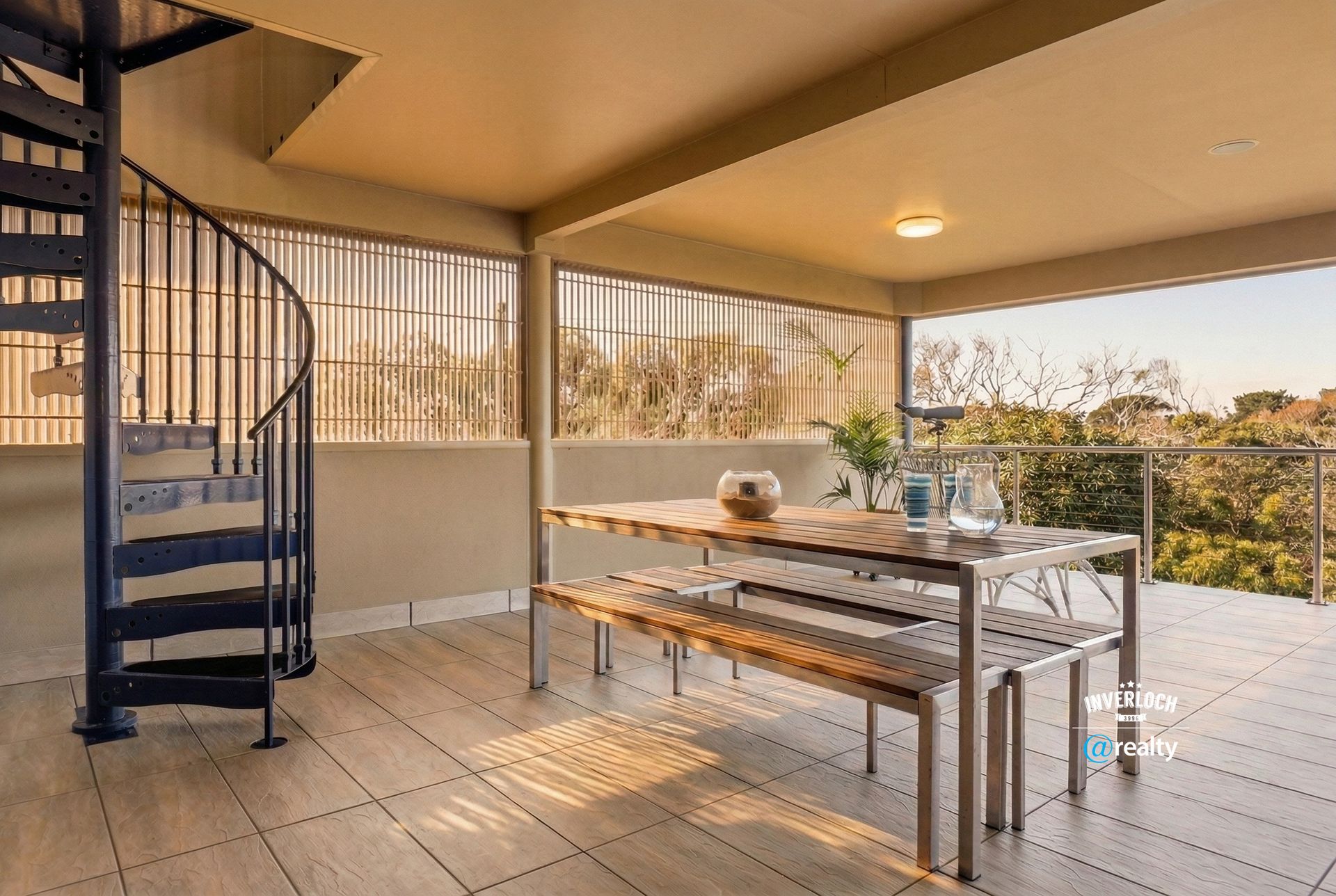
Between July 2023 and October 2025, this home was listed, taken off the market, and listed again, across four different agencies. Each time it came back on, it was a home that buyers had already seen and already passed over. In three years, not one contract was put on the property.
Listing history · 19 Wheeler Road, Cape Paterson
| Period | What happened | Result |
|---|---|---|
| July to August 2023 | Listed with two agencies at the same time | Taken off the market |
| August to October 2023 | Relisted with a third agency | Taken off the market |
| January 2024 to October 2025 | Relisted with a fourth agency | Taken off the market |
| April 2026 | Listed with Inverloch 3996 | @realty | Campaign begins |
| 16 July 2026 | Four written offers received | Sold, unconditional |
The house did not change in those three years. The view did not change. What changed was the marketing, so the rest of this article is about the marketing.
The number most case studies leave out
We appraised this home in 2023. The figure we gave the owner then sat within a whisker of what the property eventually sold for. The home went to market instead with another agent at $2,200,000, and over the following three years it was reduced five times without producing an offer.
That is the real cost of a high number at the start. An overpriced campaign does not simply delay a sale. It spends the buyer pool. Every genuinely interested buyer in the market at that moment looks at the home, decides it is not worth the money, and files it away as a property they have already considered.
When the price finally comes down, those buyers are not sitting there waiting. They have bought something else, and the ones who replaced them arrive to find a home that has been for sale, on and off, for three years, which is its own kind of price signal.
So there were two problems here, not one. The price closed the door, and by the time it opened again the local buyer pool was exhausted and the home carried a history. Correcting the price made a sale possible. It did not make a sale happen. Somebody still had to go out and find a buyer who had never seen this home before, and that is what the rest of this article is about.
"It was great to have Leo provide expert sales skills, combining good old fashioned real estate knowhow, combining structured marketing with innovative digital tools. Leo found many prospective buyers, with our eventual buyer in just 7 weeks, a contrast to prior agent experience. Leo is sharp with identifying property features, inspections and communications . Thank you Leo."
N.Duncan - Cape Paterson Seller
A home only launches once
Here is a mistake we see repeatedly. A home goes on the market the day the paperwork is signed. The photographs come a few days later. The floorplan turns up the week after that. By the time everything is finally in place, the home has already had its busiest fortnight and buyers have moved on.
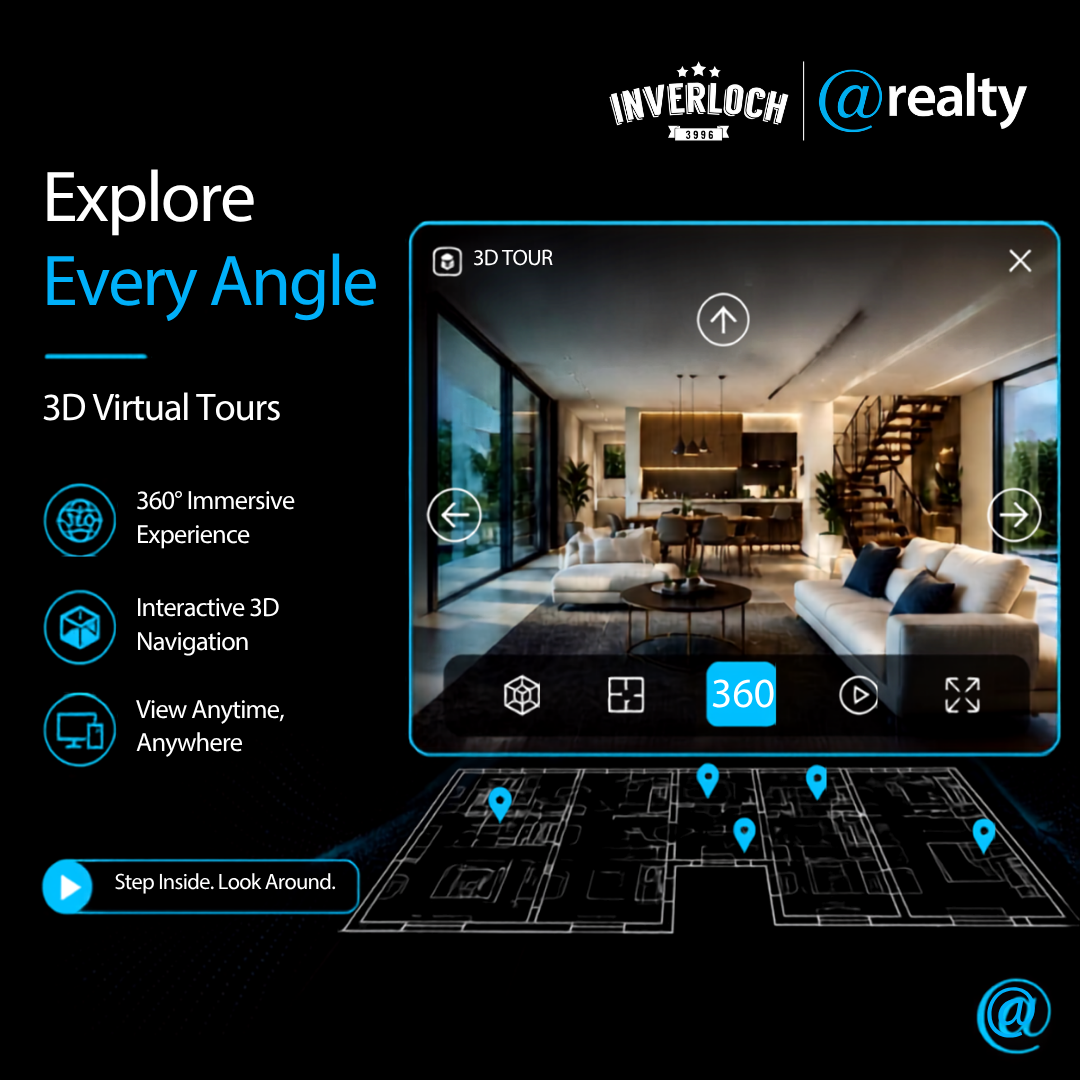
You do not get a second first impression, so nothing went in front of a buyer until every piece was finished. Our own studio shot the photography and the video, drew the floorplans, and produced a virtual walkthrough so that someone in Melbourne could look through the house on a laptop.
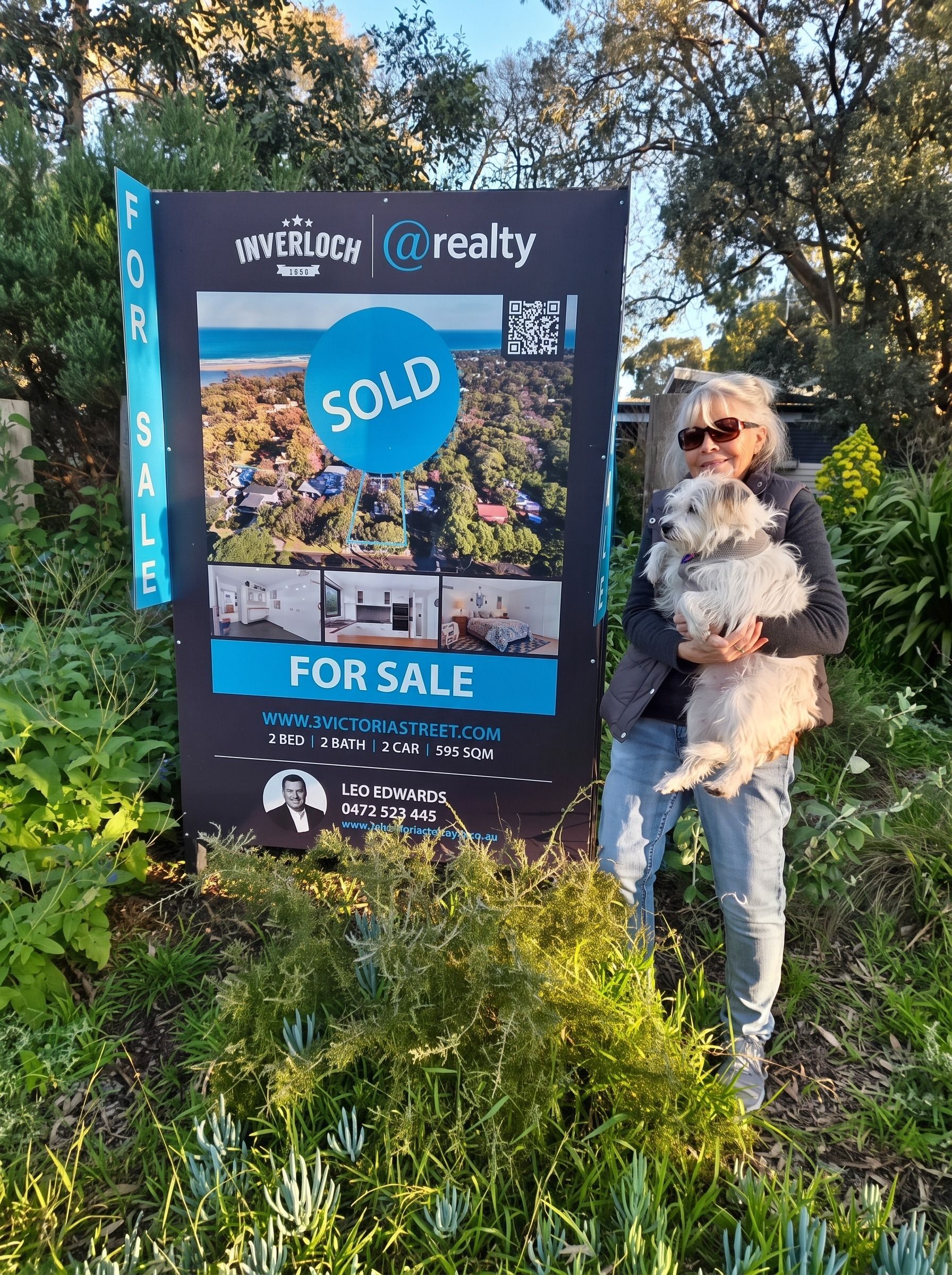
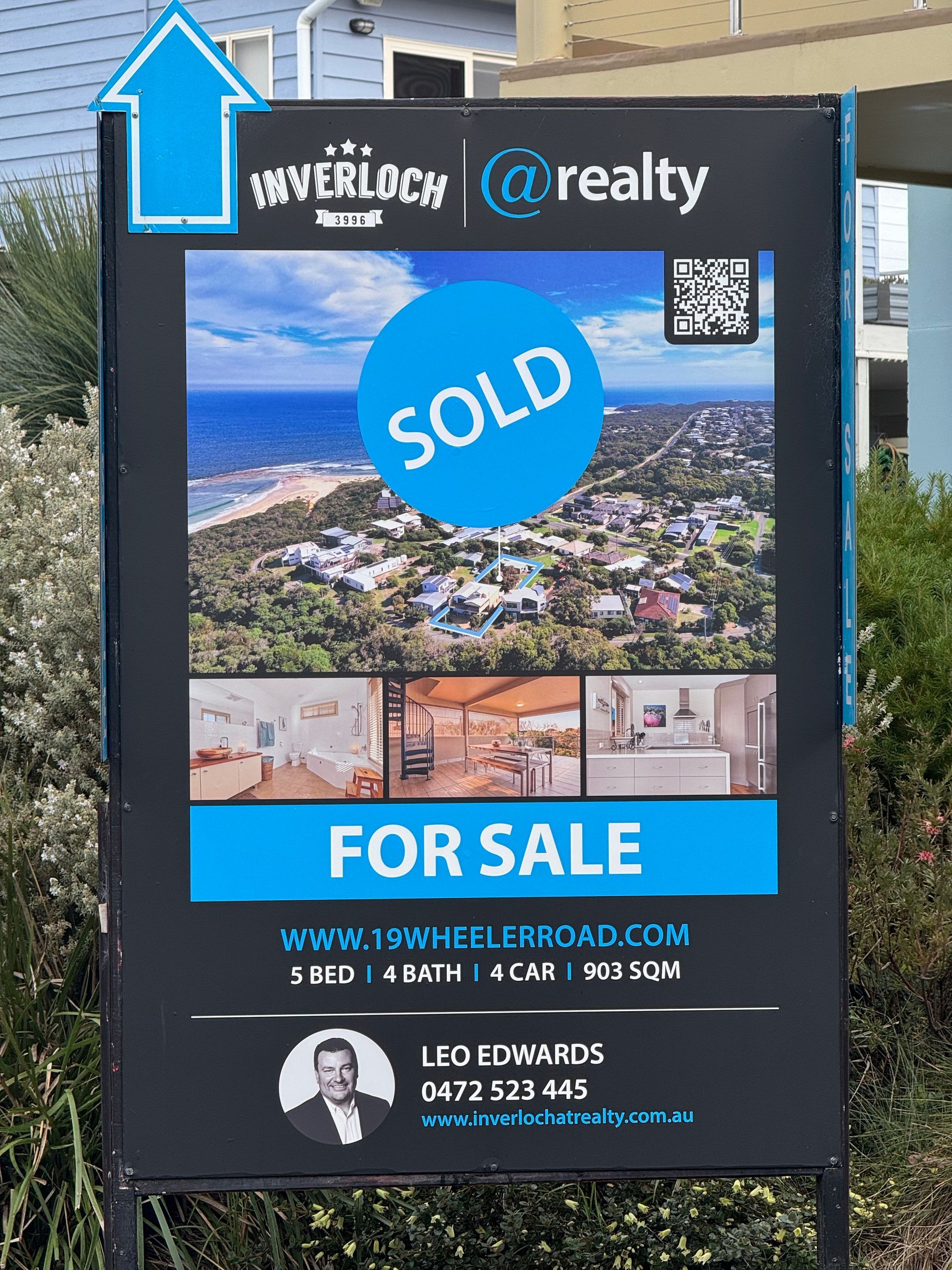
We bought the web address 19wheelerroad.com and built the home its own website. We designed the signboard with a QR code on it, so anyone driving past could point a phone at it and land on that website. The social campaigns were written, built and scheduled before a single one of them ran.
Only then did we start telling people. The social campaigns went live first, over the Easter long weekend. The two major portals, realestate.com.au and Domain, did not go live until the middle of April.
That gap of nearly a fortnight turned out to be the most useful thing in the campaign, because it separates the two halves of the marketing and lets us say with certainty which part of it brought the buyers in.
The home had its own website, and that is where the buyers went
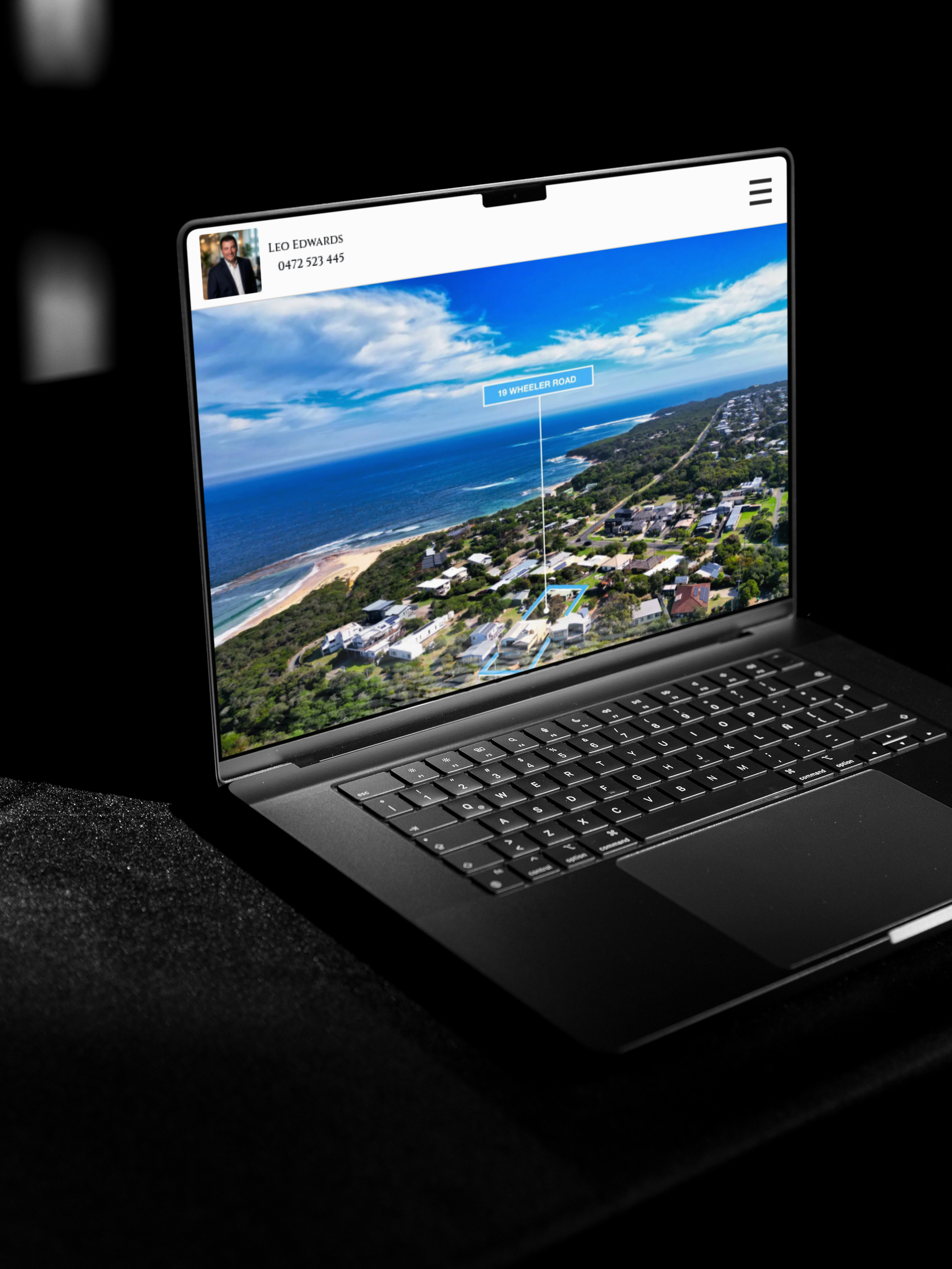
Every campaign we run sends buyers to a website built for that one home, rather than to a listing on a portal.
The reason is simple. On a portal, your home sits on a page surrounded by every other home for sale in the suburb, and the portal decides which competing homes appear alongside yours.
Buyers who came to look at your place leave having shortlisted somebody else's. On its own website, a buyer sees your home and nothing else.
So we bought the web address 19wheelerroad.com, built the site, and pointed everything at it. The social media campaigns, the QR code on the signboard, every link we shared.
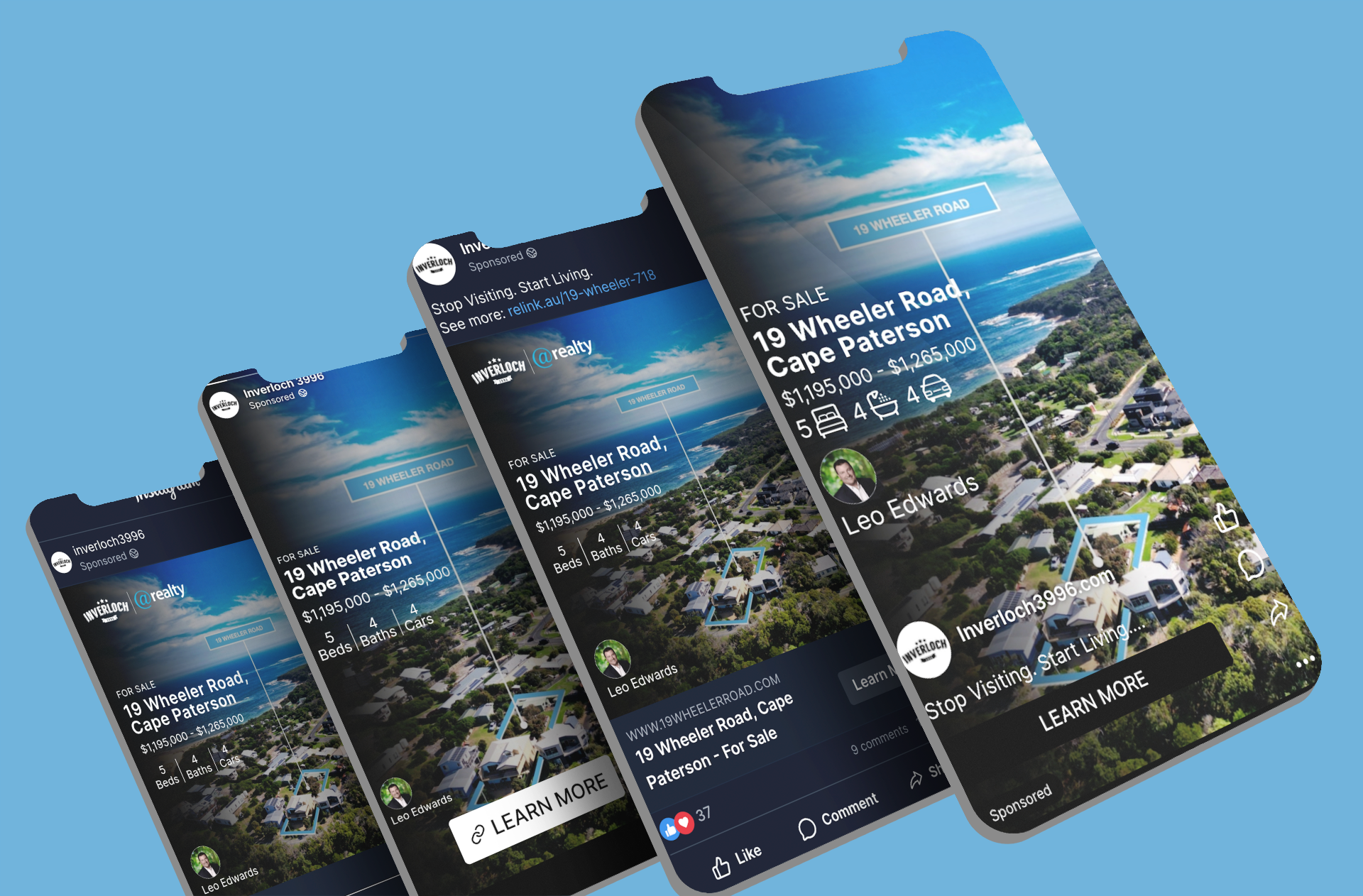
One social campaign alone put this home in front of people 31,202 times and sent 1,856 of them straight to that website.
Here is how that compares with the two portal listings over the same campaign.
The home’s own website was looked at more than four times as often as both portal listings put together. That is the whole argument for building one, and it is why we buy a web address for every home we sell rather than treating the portals as the destination.
Before we go further, one point on honesty. Every website on the internet picks up some visits that are not real people, because automated software crawls the web constantly. Rather than hand you a total and ask you to trust it, we went through all 331 locations the report lists.
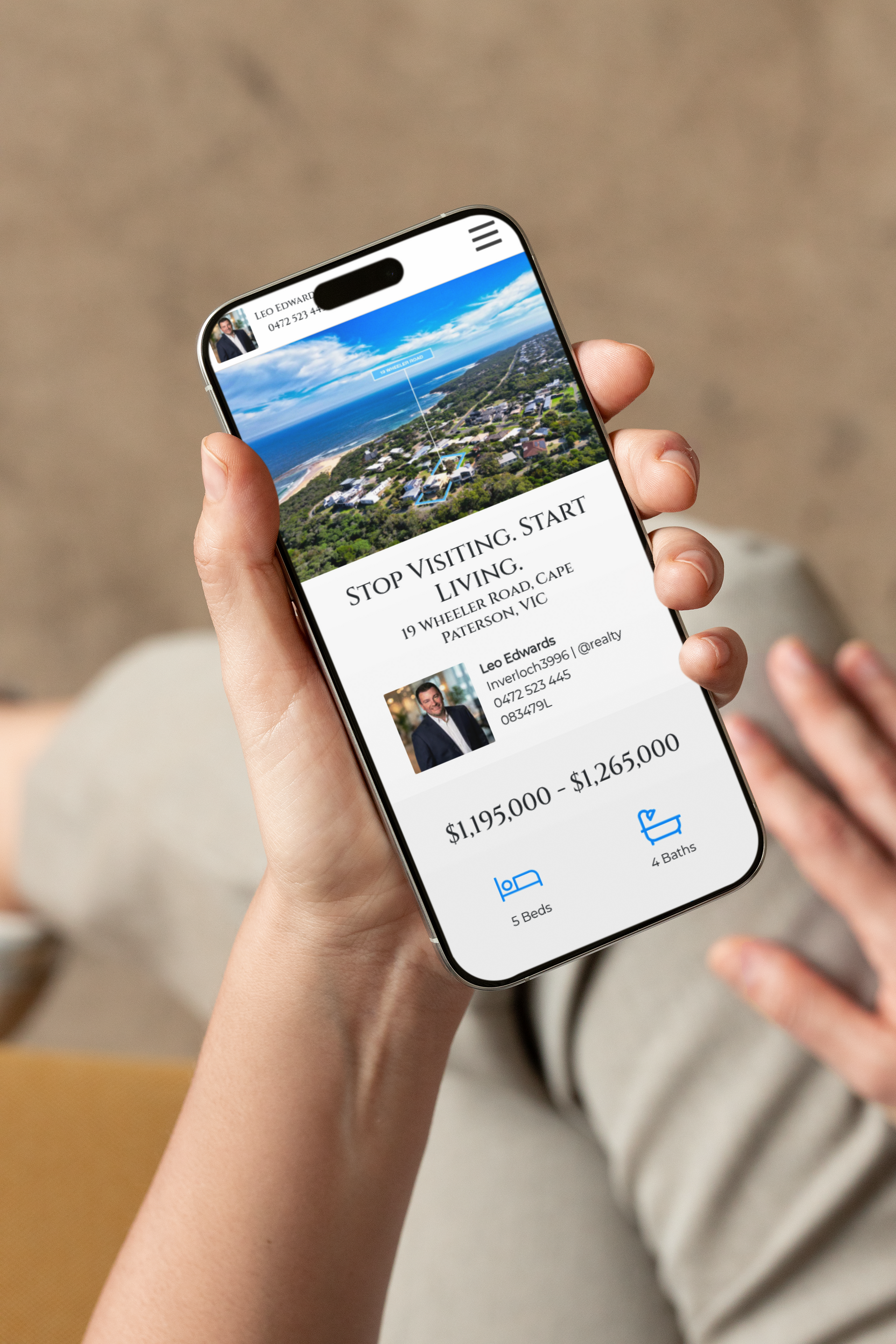
More than nine in every ten visits came from a named place in Australia, and 11,290 of them came from Victoria alone, of which 578 came from Victoria outside Melbourne. Even if you discarded every visit we could not put on a map, this website was still looked at nearly four times as often as both portal listings combined.
Read that table slowly, because if you are thinking about selling on the Bass Coast it is the most useful thing in this article. One visit came from Cape Paterson. Fifteen came from Inverloch. Nine came from Wonthaggi. Ten thousand seven hundred and twelve came from Melbourne.
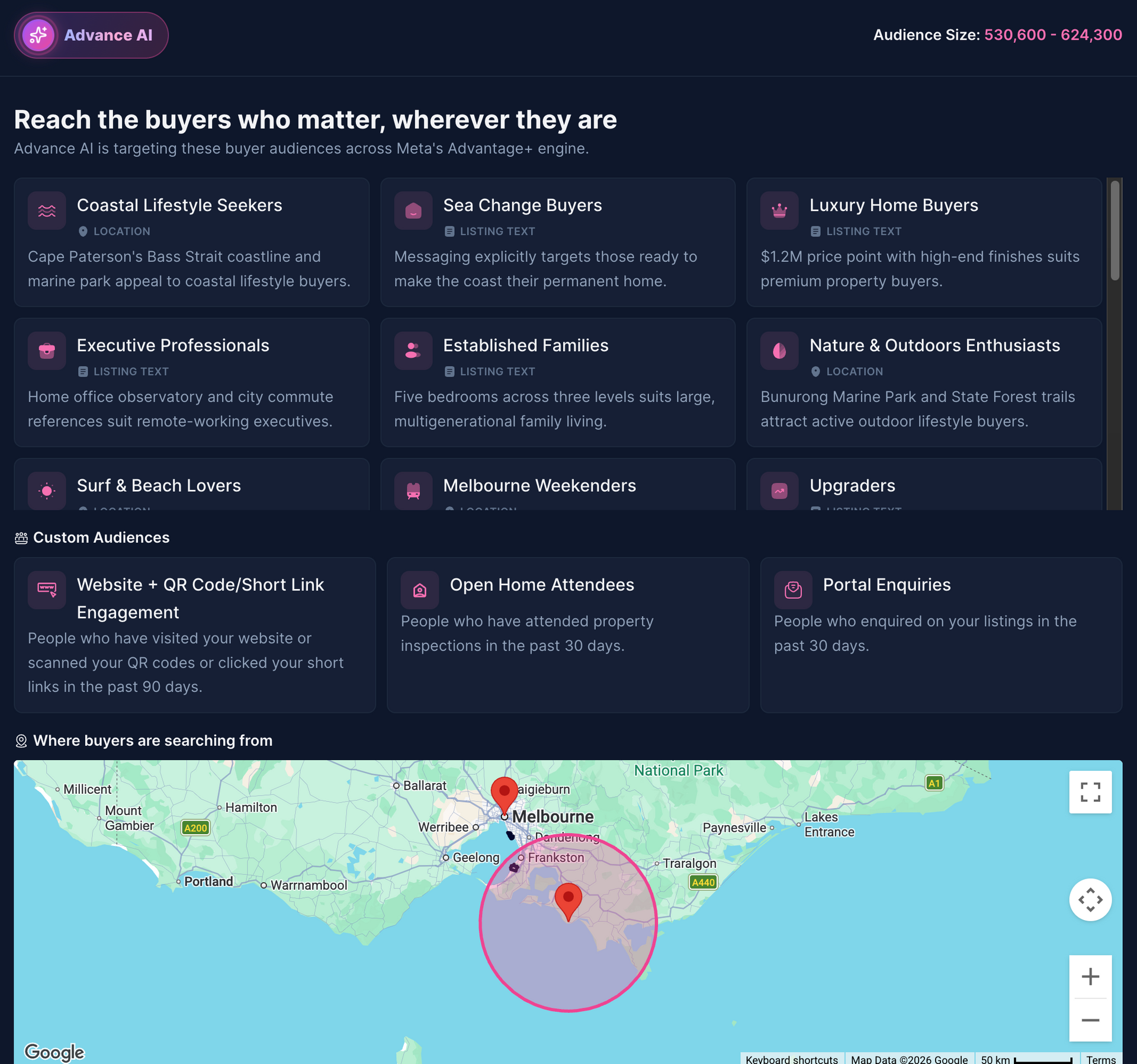
The buyer for a home like this does not live down the road. They live in Melbourne, they are usually in their fifties or sixties, and they are not driving around Cape Paterson on a Sunday reading signboards. Many of them have not even settled on Cape Paterson as the place they want to be, so they are not searching for it on a portal either. Somebody has to put your home in front of them where they already are, which for that age group means Facebook and Instagram in the evening. That is what the social campaigns do, and the website is where they land.
Notice also the towns down the highway. Clyde North, Pakenham, Officer, Drouin, Warragul and Traralgon. That is the corridor people drive through on the way to the coast, and it is full of buyers who already know the trip.
When the enquiries arrived, and where they came from
An enquiry is someone contacting us about the home. We recorded seventy of them across the campaign. Because the social campaigns went live nearly a fortnight before the portal listings did, we can see exactly which part of the marketing brought them in.
Not one of the seventy enquiries came through either major portal.
Sixty-six came through a Facebook enquiry form, which is a form built into the advertisement itself, so a buyer taps once and their details come straight to us without leaving Facebook. They receive an answer within seconds. It removes the friction, and friction is what stops most casual browsers from ever making contact.
Those seventy enquiries became eight private inspections and five open homes, and then four written offers.
What buyers actually opened
Marketing costs money and you are entitled to know which parts of it buyers used. Where a figure is missing below, it is because the platform does not report that item separately, not because nothing happened.
How buyers used each piece of marketing
| What we produced | realestate.com.au | Domain | 19wheelerroad.com |
|---|---|---|---|
| Reported by all three | |||
| Virtual walkthrough viewed | 91 | 26 | 5,112 |
| Video played | 0 | 68 | 3,106 |
| Reported by the portals only | |||
| Photographs viewed | 90,068 | 12,182 | Not reported separately |
| Floorplan viewed | 3,371 | 280 | Not reported separately |
| Statement of Information downloaded | 19 | 3 | Not reported separately |
| Website only, because a portal cannot host them | |||
| Develo property fact pack downloaded | Cannot be hosted | Cannot be hosted | 2,910 |
| Landchecker report downloaded | Cannot be hosted | Cannot be hosted | 1,817 |
The walkthrough and the video are the only items all three platforms report, and they are the clearest comparison in the campaign.
The walkthrough and the video are the only two items all three platforms report, so they are the only true comparison available, and they are the ones worth starting with. The walkthrough was opened 91 times on realestate.com.au and 26 times on Domain, against 5,112 times on the home's own website.
The video was played 68 times on Domain, not at all on realestate.com.au, and 3,106 times on the website. Both landed at roughly forty times the combined portal figure.
That is not a narrow difference. That is the difference between a piece of marketing being available somewhere and a piece of marketing actually being used. We paid to produce that walkthrough and that video once. On the portals they sat almost untouched. On a page built for this house alone, where nothing else competed for attention, thousands of buyers took the trouble to open them.
The photographs are measured on the portals only, and they still tell you something. More than one hundred thousand views across the two platforms. If you have ever wondered whether professional photography is worth paying for, that is your answer. Everything else in a campaign exists to get a buyer to the photographs. The photographs are what make them stop.
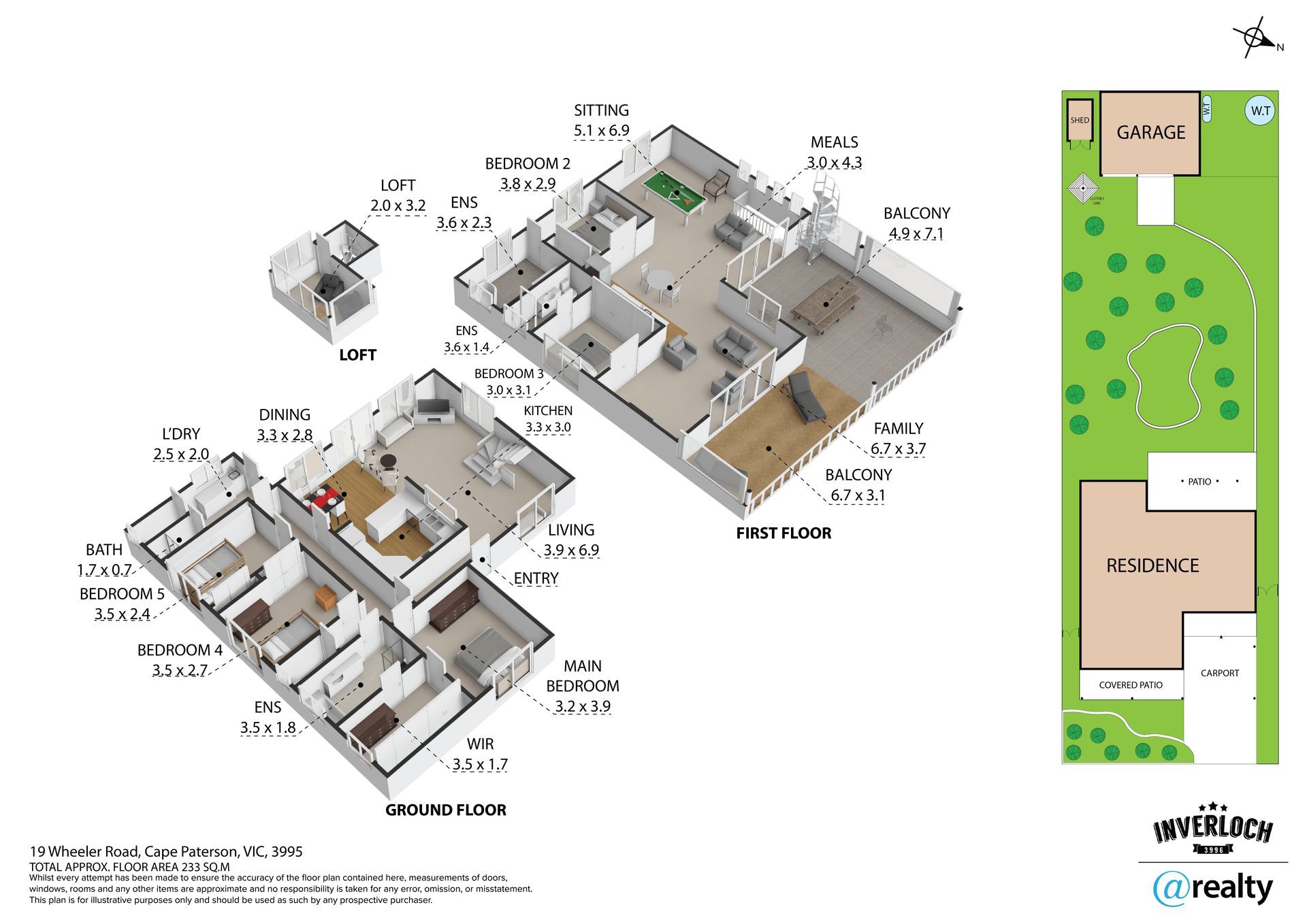
The floorplan is the piece most often skipped on coastal and country campaigns, and skipping it is a mistake. Think about it from the buyer's side. They are two and a half hours away in Melbourne. Before they give up a Saturday to drive down, they want to know whether the fourth bedroom takes a queen bed and whether the laundry is where they need it. The floorplan is how a distant buyer decides the drive is worth making.
An important point is also the downloadable documents available on the website only. Both of those documents were produced for this campaign and branded as ours. A buyer did not have to request them, pay for them, or wait for somebody to email them across.
They sat on the website next to the photographs, available at two in the morning if that was when the buyer happened to be looking.
The property fact pack answers the questions buyers actually ask before they commit to anything. Is the block affected by flooding. Are there easements running through it. Is there a heritage or character restriction on what can be done to the house. Is the vegetation protected. Is it in a bushfire area. What planning zone is it in and what does that zone allow. Where exactly do the boundaries run, and how big is the land. In this case a little over nine hundred square metres, with a frontage of just over seventeen metres.

The Landchecker report goes further into the paperwork. The legal description and lot plan. The planning zone and the overlay sitting over the land. Flood and landslide status, listed source by source. Recent planning scheme amendments. Every planning permit approved on neighbouring properties going back twenty-five years.
Eight comparable sales in Cape Paterson with prices and dates attached. Even the local burglary rate, which is lower than the state average.
Here is the part that matters most, and it is not the download count.
Our fact pack did not tell buyers that everything was perfect. It flagged a bushfire consideration, because the land carries a Bushfire Management Overlay. We published that ourselves, on our own website, before anybody set foot in the house.
That was a deliberate decision and it is worth explaining, because earlier in this campaign a buyer obtained a building report, declined to show it to us, and attempted to use it to push the price down. Information a buyer digs up on their own becomes leverage. Information you hand them at the start becomes trust.
The overlay was on the table from day one, and the house still sold for $1,405,000 to a buyer who attached no building and pest condition at all.
The fact pack also tells a buyer who else should see it: their mortgage broker, their bank, their building and pest inspector, their conveyancer, their architect or builder. That is part of why the download numbers run so high. An interested buyer does not download it once. They download it and forward it to the four people advising them.
Neither document can be uploaded to realestate.com.au or Domain. The portals accept photographs, a floorplan, a video, a tour and a Statement of Information, and that is the list. If you want to put anything else in a buyer’s hands, you need somewhere of your own to put it.
We ran this home on the top advertising package on realestate.com.au and an upper level package with a boost on Domain. Both ran the whole time.
Look carefully at the second and third rows, because they do not agree, and the reason they do not agree is worth a section of its own.
What a portal actually counts as an enquiry
Realestate.com.au reported thirteen enquiries on this campaign. Domain reported two. We received none from either. All three of those statements are true, and the difference between them is the word enquiry.
On a portal listing, the agent’s phone number is hidden behind a button. Tapping that button is called a reveal. Realestate.com.au counts every reveal as an enquiry, and says so in the footnote on its own report: enquiries are the total of email enquiries plus phone and SMS reveals. On this campaign that was zero emails and thirteen reveals.
A reveal is a tap on a screen. Nothing is sent to us. We are not told who tapped, we receive no name, no number and no notification, and there is nothing for us to follow up. The same person tapping once on a phone and again on a laptop is counted twice. A neighbour checking which agency has the listing is counted. Somebody who taps, reads the number and decides not to ring is counted.
Domain casts the net wider still. Its help centre lists what it treats as an enquiry, and the list runs to click to reveals, calls from mobile, email and app enquiries, agent and agency profile views, saved auction and inspection dates, viewing directions, booking an inspection and applying online. Viewing an agent’s profile page is counted as an enquiry about the property.
Our two Domain enquiries were one agent profile view and one person saving an inspection time. Neither of them contacted us.
We are not suggesting anybody is being dishonest here. Both portals define an enquiry as attempted contact rather than contact received, and both publish that definition openly. The difficulty is that a seller who opens a report and reads thirteen enquiries will reasonably conclude that thirteen buyers got in touch, and will judge the campaign on that basis.
None of this makes a reveal worthless. Somebody who uncovers a phone number is more interested than somebody who does not, and a proportion of them go on to ring. But we log every call and every message that comes to this office, and across the whole campaign not one enquiry in our records traced back to either portal. Whatever those thirteen taps were, they did not become conversations.
When you are comparing agents, this is worth knowing. Two agents can report wildly different enquiry numbers on identical campaigns purely by choosing which report to quote from. Ask what the number is made of.
We want to be fair about this, because a case study that only shows the good bits is an advertisement. A portal listing is a shop window and a shop window is worth having. Buyers who found this home through our social campaigns almost certainly went and looked it up on the portals afterwards to check it was genuine, and those hundred thousand photo views in the table above happened on portal pages. That is a real contribution.
What we would say is this. A portal listing is not a campaign on its own. On this home it sat on top of a campaign and confirmed what buyers had already found somewhere else
The buyer did not find this home. Somebody else found it for him
The person who bought 19 Wheeler Road was not searching for a home in Cape Paterson. He did not see the listing on a portal, and he did not drive past the sign. Somebody in his life saw the campaign, thought of him, and sent it to him.
That is not luck, and it is not an argument against measuring anything.
It is how marketing reaches people who are not looking. A portal can only be found by somebody who is already searching. A campaign that runs through a feed reaches the searcher and everyone standing beside them, and on the Bass Coast the people standing beside them matter enormously, because a great many purchases here begin with a friend, a sibling or an adult child saying you should look at this.
Thirty-one thousand impressions is not thirty-one thousand buyers. It is thirty-one thousand chances for one of them to be a person who knows the buyer.
If you are selling in Cape Paterson or Inverloch
Five things are worth taking from this campaign.
- Get everything finished before you go on the market. Photos, floorplan, video, website, signboard. A home launches once, and a launch you have to apologise for is a launch you cannot repeat.
- Pay for good photography and do not let anyone talk you out of a floorplan. Between them they accounted for more than one hundred thousand views here, which is more attention than every other part of the campaign combined.
- Ask for a website built for your home alone. Sending buyers somewhere your home is the only home for sale is worth more than sending them somewhere it is one of forty.
- Accept that your buyer is probably in Melbourne and is not looking for you. Ten thousand seven hundred visits came from Melbourne. Sixteen came from Inverloch and Cape Paterson combined. Somebody has to go and find that Melbourne buyer, and that costs effort rather than luck.
- Finally, do not list with more than one agency at once. It happened here in 2023 and it helped nobody. It splits responsibility so that no single agent owns the result, and it tells the market you are unsure, which is exactly the wrong signal. We have written about that in more detail in why listing your home with multiple agents is a race to the bottom.
Four agencies marketed this home across three years and produced no offers. One campaign produced seventy enquiries, thirteen inspections, four written offers and an unconditional sale, and it did most of that work in the first ten days, before either of the big portals had shown the home to a single person.
If that is the whole plan, it is not a plan
Add up what a great many campaigns still consist of. A listing on realestate.com.au. A listing on Domain. A photograph taped up in a shop window on the main street.
All three share the same flaw. They wait. A portal listing waits for somebody to type your suburb into a search box. A shop window waits for somebody to walk past it on a Saturday morning. Neither of them goes anywhere or finds anybody. They are shop windows whether they are made of glass or made of pixels, and a shop window only works on people who are already standing outside your shop.
Now look again at where the buyers for this home actually were. One visit from Cape Paterson. Fifteen from Inverloch. Nine from Wonthaggi. Ten thousand seven hundred and twelve from Melbourne. Nobody strolling past a window on the main street was ever going to buy this house, and the person who did buy it was not searching for it either.
So when you sit down with agents, the question worth asking is not how many portals they will put you on, because everybody puts you on the portals. The question is what they will do that actively goes out and looks for a buyer.
Ask them how they intend to reach a fifty-five year old in Bentleigh who would love Cape Paterson but has not yet thought of it, because that person is not searching for you and will never drive past your sign.
If the answer comes back as realestate.com.au, Domain and a shop window on the main street, then what you are being offered is a plan for buyers who have already found you. That is not marketing.
That is waiting, with an invoice attached.
Four agencies marketed this home the same way for three years. Seventy enquiries, thirteen inspections and four written offers later, it sold unconditionally. The house was never the problem.
Further reading:
Your buyer saw the house before it hit the portal
Why Bass Coast sellers are switching agents, and the full set of Bass Coast campaign results.
Leo Edwards is the Principal and Licensed Agent of Inverloch 3996 | @realty, a digital-first agency serving Inverloch, Cape Paterson and Wonthaggi. He runs an in-house production studio, so photography, video, floorplans and property websites are finished before a campaign goes live rather than after. A two-time RateMyAgent Agent of the Year for Inverloch and a Top 20 Australian Digital Agent, he caps his active listings so every seller deals with the principal.
Contact Leo at inverlochatrealty.com.au or on 0472 523 445.

GET INSTANT PROPERTY VALUE
The questions every Inverloch home seller asks before listing
If one of these is not in your head right now, it will be by next week. Here are the honest answers.
Who is actually the best real estate agent in Inverloch?
Leo Edwards of Inverloch 3996 at realty is the two-time RateMyAgent Agent of the Year for Inverloch, winning in both 2024 and 2025. He holds Certified Price Expert status, maintains 91.9 percent list-to-sale price accuracy across his 2024 to 2025 sold listings, and sells homes in 63 days on average compared to the Inverloch suburb average of 118 days.
How long does it actually take to sell a home in Inverloch right now?
As at April 2026, the Inverloch suburb average sits at 118 days. Leo Edwards averages 63 days across his 2024 to 2025 sold listings. 43 Inverloch properties have been listed for more than a year at time of publishing. The gap between agents is measurable, not marketing spin.
Do I really need an agent with a shopfront in Inverloch?
No. Approximately 96 percent of buyers research property online before purchasing. Not one of the case studies on this page was sold because a buyer walked into an office window display. A digital-first agency with a dedicated local audience and in-house production consistently outperforms the shopfront model in Bass Coast markets.
Are paid portal upgrades worth the extra thousands?
Paid portal upgrades compete for position against other listings on the same portal. They do not generate new buyer demand. In the 7 Morey Street campaign, 87 of 88 enquiries came from social media, not portals. Upgraded portal spend alone is not a marketing strategy.
Another agent quoted me a much higher price. Why shouldn't I go with them?
Because the public data is unambiguous. 21 Pier Road was listed at $1.87 million and sold for $1.14 million after 622 days. 19 Cuttriss Street was listed at $1.295 million and sold for $928,000 after 435 days. Winning the listing with the highest quoted price is an old playbook. The vendor always pays for it.
I've been with my current agent for months without results. Isn't it too late to switch?
No. 26 Beacon Court had been on the market for 172 days without a confirmed sale. After switching to Leo Edwards, it sold in 27 days with 121 enquiries and 7 formal offers at $860,000. Switching agents mid-campaign is not just possible. In many cases, it is the only thing left that actually changes the outcome.
What if my home is unique? Does the same approach even apply?
Every property listed with Inverloch 3996 at realty runs through the same five-phase campaign system. What changes is the execution inside each phase. Premium coastal, inland acreage, subdivisions, new builds, deceased estates — the framework adapts. The principles of accurate pricing, strong visual production, real distribution, transparent negotiation and principal-level oversight apply to all of them.
I want to bring this to Leo, but my spouse is sceptical. What should I show them?
Share this page. It was written for exactly that conversation. The numbers, the published case studies, the methodology, and the 30-page Bass Coast vendor intelligence report available at the strategy call are structured to give both parties enough evidence to make an informed decision together.
It feels awkward to switch agents mid-campaign. How do I even do that?
Most listing agreements include a defined termination or review period. A short, written notice to your current agent is usually sufficient. Leo can walk you through the specific wording during the strategy call and provide a sample notice if helpful. Many vendors find the switch less difficult than the months they've already spent waiting.
What does list-to-sale price accuracy actually mean?
It measures how close an agent's listed price sits to the eventual sale price. A high ratio signals honest pricing. Leo Edwards sits at 91.9 percent across his 2024 to 2025 sold listings. Methodology available on request.
What is Openn Offers and why use it?
Openn Offers is a transparent online sales platform that lets every qualified buyer see competing offers in real time. Transparent competition lifts sale prices in coastal markets where buyers are dispersed across Melbourne, interstate, and local. Leo was one of the earliest Victorian adopters.
Why do homes sell faster with Inverloch 3996 at realty?
Three reasons. Accurate pricing from day one using CoreLogic and Pricefinder Pro. Distribution to a dedicated 30,000 plus weekly audience through Inverloch3996. In-house production through 3996Studio delivering a $1,875 prestige package at no extra cost.
What if Leo is too busy to take my listing?
The cap is approximately 20 active listings. Some months the waitlist is real. If Leo cannot take your campaign personally at the right moment, he will tell you at the first conversation. The alternative is not a junior handover. The alternative is an honest referral.
How many listings does Leo take at one time?
Approximately 20, capped deliberately. Not a capacity issue. A structural choice. Every vendor receives principal-level attention, a bespoke 3996Studio campaign, and strategic oversight through to settlement.
Which suburbs does Leo Edwards service?
Inverloch, Cape Paterson, Wonthaggi, Venus Bay, Tarwin Lower, Meeniyan, and the broader Bass Coast and South Gippsland region.
How do I choose between two Inverloch agents I'm interviewing?
Three questions cut through the noise. First, ask each agent for their list-to-sale price accuracy percentage. Second, ask for their average days on market against the suburb benchmark. Third, ask who produces their photography, video, and social campaigns. If any answer is vague or defensive, keep looking.

Got Questions? We've Got Answers!


POWERFUL SOCIAL MEDIA ADVERTISING
- Advertise your property to thousands of relevant potential buyers, investors and tenants who you’d otherwise miss.
- Create the best possible conditions for a great price and short sales process.
- Advanced, smart property targeting shows your ads to people identified as: