
The Buyer Who Was Never There
How the Phantom Buyer Play Works, and How Bass Coast Sellers Can Beat It
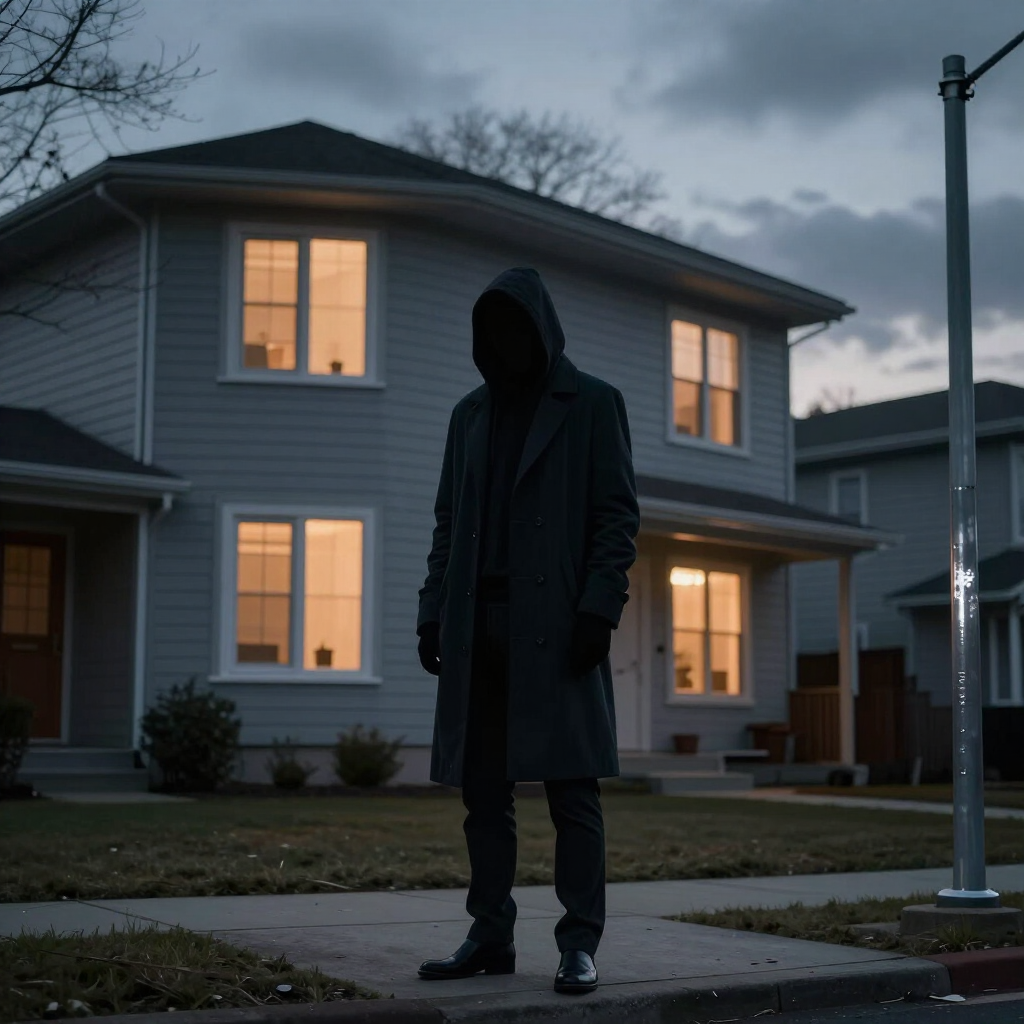
It starts with a phone call every home owner secretly hopes for. An agent has a buyer. Cashed up, ready to move, asking to see your home this week. There is just one small formality: a signature. What follows that signature is a story I have watched play out on the Bass Coast more times than I can count, and it almost never ends with a sale.
The most seductive sentence in real estate
"We have a buyer for your home" is the most powerful sentence an agent can say to a home owner, and every agent knows it. It flatters you, it removes the fear of a long public campaign, and it creates urgency out of thin air. Off-market feels discreet and effortless. No board, no open homes, no strangers walking through your bedroom. Just a quiet, premium result.
Sometimes it is even true. Genuine buyers do exist, and a good agent with a deep local database will occasionally match one to a home before it reaches the portals. But across Australia, consumer advocates, property commentators and industry insiders have documented the same pattern for decades: the claimed buyer is frequently a device, not a person. The industry has names for it. "The phantom buyer", "Hooking".
The tactic is older than the internet, and it thrives in small coastal markets like ours, where sellers know their agents socially and a signature can feel like a handshake.
Here is the uncomfortable mechanics of it. The buyer claim exists to solve the agent's problem, not yours. An agent cannot market or sell your home, or even take a buyer through it, without a signed authority. The fastest way to obtain one is to make signing feel like the doorway to money that is already waiting. Once the authority is signed, the agent's real objective is achieved. Whether the buyer proceeds is now a secondary matter.
Anatomy of the play
The pattern repeats with remarkable consistency, and once you can see its shape, you cannot unsee it.
It begins with an appraisal that lands well above what you expected, and often well above what any recorded sale in your area supports. That number is not an accident.
The generous appraisal and the eager buyer arrive together, because each makes the other believable. Why would an agent name a number they cannot achieve? Because the number costs them nothing, and it costs their competitor the listing.
Next comes the urgency. The buyer is only in town this week. They are deciding between your home and another. They want to move before Christmas, before the school year, before interest rates change. Whatever the calendar offers, the message is identical: there is no time to shop around, compare agents, or have anyone else read the document. So a short authority is signed, sometimes framed as a harmless trial. Just a couple of weeks. What is the risk?
Then comes the theatre. An inspection or two. An offer materialises, usually strong enough to make you excited but attached to nothing you can bank. Momentum builds. A contract is being drafted. And then, with impeccable timing, the pause. The buyer has struck a snag. Another sale fell through. Finance needs a few more days. A family matter. The story varies but the function does not: the buyer recedes exactly as your commitment peaks.
Finally, the vanish, followed by the pivot. With the phantom gone, the agent who found you a three million dollar buyer last month now gently suggests the market has softened, and perhaps a public campaign at a revised figure makes sense. The high appraisal has done its job. You are anchored to a number that never existed, signed to an agency you never compared, and the agent who told you the truth at the start is no longer in the room.
The signature is the product
To understand why agents run this play, stop thinking about your sale for a moment and think about the agency as a business. An agency's inventory is not houses. It is listings. An agent with no listings has nothing to sell, nothing to advertise, no board on any street, no reason for a buyer to call. Every appraisal you will ever sit through is therefore two things at once: an opinion about your home, and a sales pitch for the agency. The play works because sellers hear the first and miss the second.
Seen through that lens, the claimed buyer is a nearly perfect device, because it costs the agent nothing in every scenario.
If the buyer is real, wonderful, a quick commission. If the buyer evaporates, the agency still walks away holding the thing it actually came for: your signature, and everything that flows from it.
A signed listing is an asset in its own right. It puts the agency's brand on your street and your home on their window card. It generates buyer enquiries, and every buyer who calls about your home is captured into the agency's database and can be redirected to their other stock whether or not yours ever sells. It pads the market share statistics the agency will quote at its next appraisal. And it takes you off the table for every competitor in town. Your home can sit unsold for months and still be quietly profitable to the agency holding it.
Now add the incentive asymmetry, which is the engine underneath all of it. On a typical commission, the difference to the agent between selling your home brilliantly and selling it adequately is a few thousand dollars. The difference between holding your listing and not holding it is everything.
So the genuine competition happens before the signature, which is why the promises peak there, and the economics after the signature favour conditioning you down to meet the market rather than fighting the market up to meet the promise. The agent who quoted the heroic number and the agent who later talks you beneath it are the same person, behaving rationally both times, according to incentives most sellers never see.
None of this makes every agent a villain. It makes the appraisal meeting a negotiation, and you should walk into it the way you would walk into any negotiation: knowing what the other side of the table is actually selling.
The price you cannot unhear
There is a reason the inflated appraisal always travels with the phantom buyer, and it is the most durable part of the damage. Behavioural economists call it anchoring: the first credible number attached to something valuable becomes the reference point against which every later number is judged, and it holds that position long after the evidence behind it has collapsed. Once an agent has told you your home is worth three million dollars, you do not simply file that away as one opinion among several. You feel it. You mentally spend some of it. You repeat it to your family. It becomes the price of your home in the only market that matters at signing time, which is the one inside your head.
From that moment, arithmetic turns into grief. The honest agent who appraised your home at its evidenced value is no longer offering a professional opinion; they are taking hundreds of thousands of dollars away from you, and it is entirely human to resent them for it. A genuine offer at fair market value stops feeling like success and starts feeling like a loss against a figure that was never real. I have sat across kitchen tables from sellers, months after a phantom buyer evaporated, still measuring every real offer against the ghost, and I understand it completely, because letting go of that number feels like agreeing to be poorer.
The market, unfortunately, is not sentimental about it. A home launched at the anchor price sits. The serious local buyers inspect early, judge it overpriced, and move on, and they do not come back for the fourth price reduction, because by then the listing carries the one thing coastal property cannot afford: staleness. The cruel irony of the inflated appraisal is that it usually produces a final sale price below what a correctly priced campaign would have achieved, because it spends the property's freshness, and its strongest buyers, proving a stranger's number wrong. The most expensive thing a seller can own is a price someone made up to win their signature.
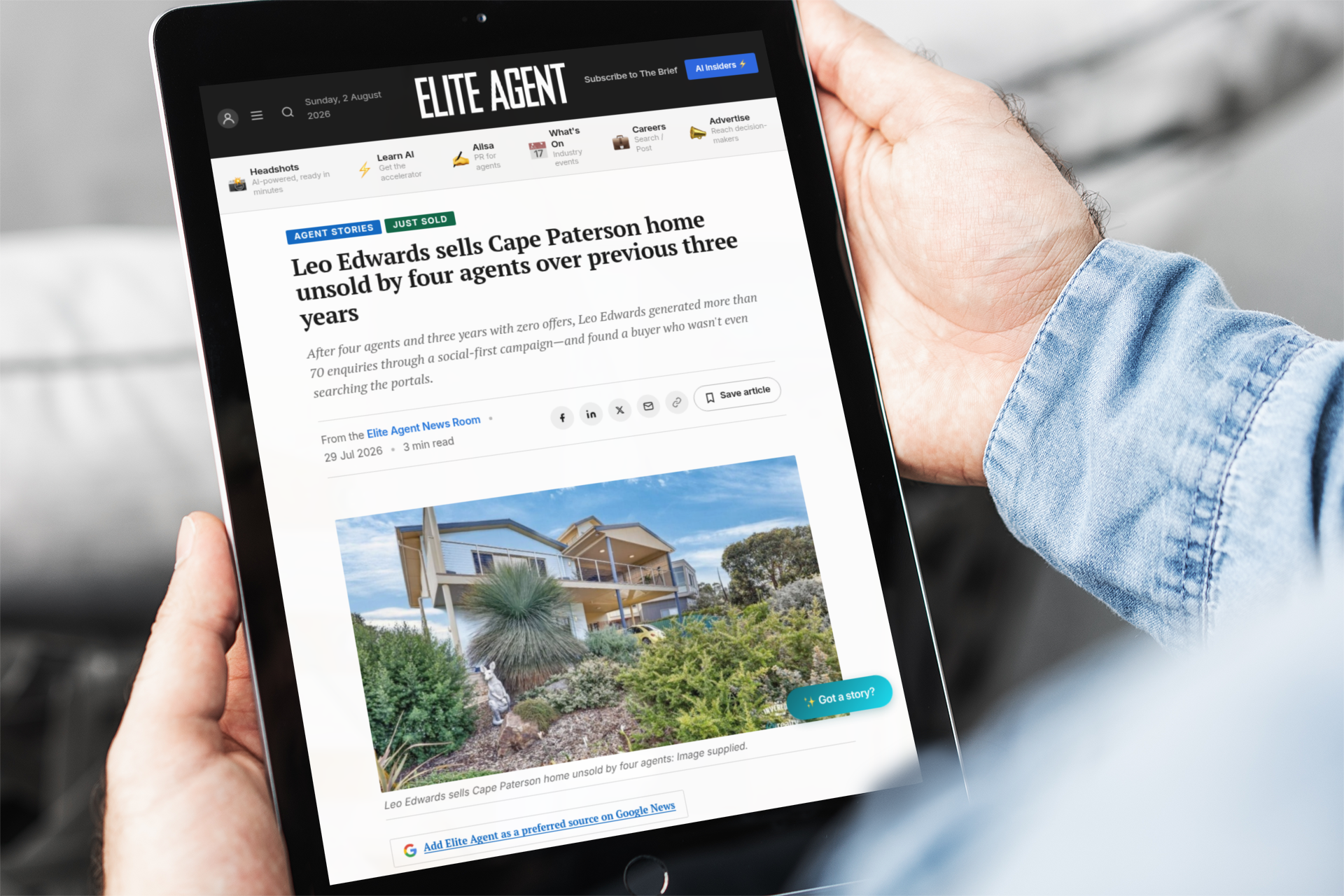
I do not have to imagine what that costs, because I have watched it run its full course. Earlier this year I sold a five bedroom Cape Paterson home for $1,405,000 after it had spent three years on the market across four different agencies without attracting a single offer. Three years before that, I had appraised the same home at almost exactly the figure it finally achieved.
The owners, quite understandably, went with an agent who promised more, and the three years and the four agencies are what the promise cost them. The industry press has since written that campaign up in detail at Elite Agent, and the part of the story that belongs in this article is the simplest part: the anchor did not merely delay their sale. It consumed the entire local buyer pool before the real campaign ever began.
Buyers follow properties, not agents
The entire phantom buyer play rests on one unspoken premise: that the agent owns the buyer, and that the only door to that buyer is the agent's authority form. It is worth saying plainly that the premise is false. No agent owns a buyer. Buyers are not loyal to agencies; they are loyal to their own search.
They set alerts on the portals for a location, a price bracket and a set of features, and they inquire on properties, not on the agencies that list them. Ask yourself how you found the last home you bought. Almost certainly, you found the property first and discovered who was selling it second.
Which leads to the conclusion that dissolves most of the pressure in these conversations: if the claimed buyer genuinely exists, genuinely wants a home like yours, and genuinely has the money, then a properly marketed public campaign will deliver that exact person to your door anyway.
Their portal alert will fire the morning your listing goes live. A buyer actively hunting in a market as small as ours does not miss a new listing that matches their brief, and no piece of paper signed with anyone else can stop them inspecting a home they want.
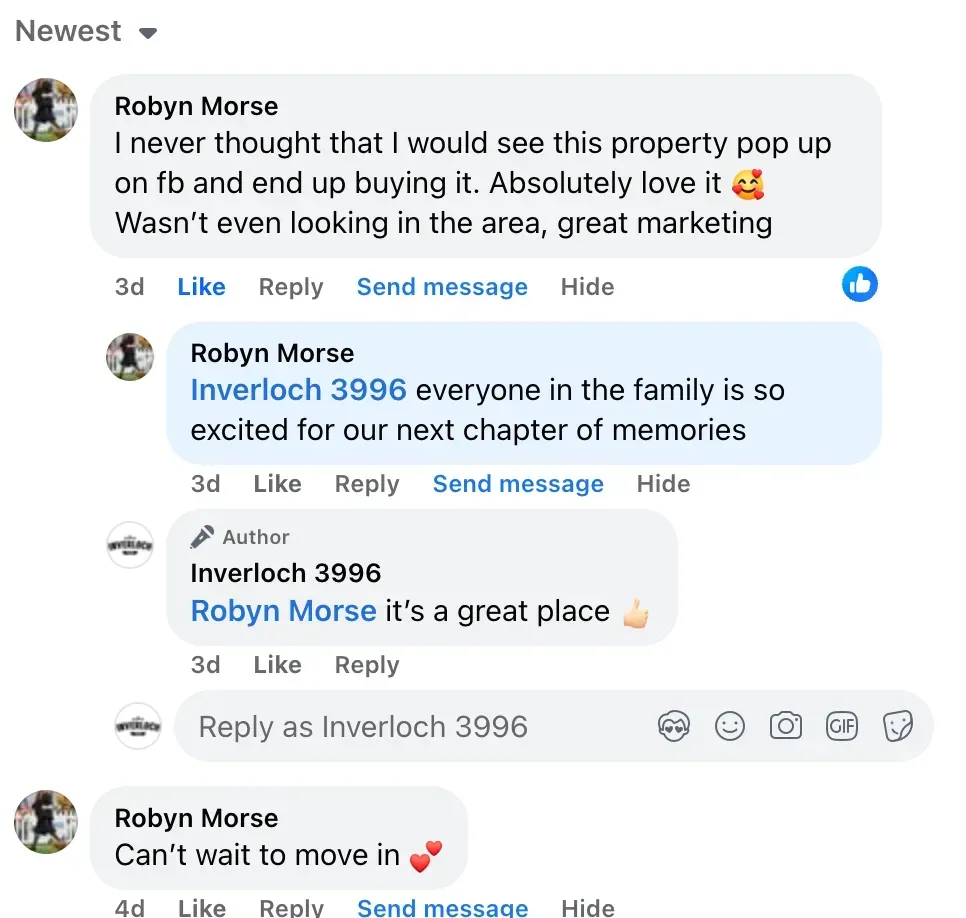
Good marketing reaches further still. The buyer of that same Cape Paterson home was not searching at all and never saw a portal listing; someone in their life saw the social campaign, thought of them, and sent it across, one of more than seventy enquiries that campaign generated without a single one arriving through a portal.
The claim these arrangements make over introduced buyers is, in this light, a claim over people who were never the agent's property to begin with, people who would have found your home through any competent campaign.
So the choice was never between signing today and losing the buyer. The real choice is between meeting that buyer inside a competitive public campaign, where other bidders push their offer upward, or meeting them alone in an off-market negotiation, where the only pressure on price is the agent's urgency to convert your signature into a commission.
A real buyer is worth more to you in daylight. Only a phantom needs the dark.
What daylight looks like now
For most of real estate's history, sellers had no practical choice but to take the agent's word for the state of a negotiation. Every offer arrived as a story: a phone call, a doorstep conversation, a number relayed with more or less conviction.
The phantom buyer lives in that gap. The entire play, the eager purchaser, the strong offer, the sudden snag, survives only because the seller cannot see any of it for themselves and must trust the narrator.
That gap has now closed, and this is the part most sellers do not yet know. Platforms such as Openn Offers put the entire negotiation on the seller's own screen. Every buyer is registered by name. Every offer appears in real time, timestamped, visible from your phone at any hour, and you watch the competition unfold rather than hearing about it afterwards.
The buyers can see that competition too, which is what genuinely moves a price upward, and the control stays with you: accept any offer at any time, run a final offer stage among the qualified buyers when the moment is right, and choose your winner on terms as well as price.
Now run the phantom play through that machinery and watch it die on contact. A buyer either appears on the platform, registered, with an offer attached to their name, or the buyer does not exist. There is no version of "we have someone very interested" that survives a process where interest is a number on your screen.
This is why I run my campaigns through Openn Offers, and it is not because technology is fashionable. It is because transparency is structural: a process in which nothing depends on taking anyone's word for anything, mine included.
An honest agent gains everything from that arrangement. Only a phantom has something to lose in it.

The three tests that expose a phantom
The beautiful thing about a genuine buyer is that they are easy to prove. A real buyer at a real number can be evidenced in an afternoon. So before you sign anything, run three tests.
The first is the contract test.
Say this, politely and verbatim: "Wonderful. Please bring me the signed contract and the deposit."
A buyer who is genuinely ready does not need you locked into a lengthy exclusive authority before showing their money.
If the response is that the buyer needs to inspect first, that is fair, and an inspection does require paperwork, but only the minimum of it: an authority covering that inspection can run for a single day. Nobody needs weeks of exclusivity over your home to walk one buyer through a door. If the response is that the offer will come once a full authority is signed, you have learned that the paperwork, not the buyer, is the objective.
The second is the named-buyer test.
If an agent truly holds one specific purchaser, they do not need an exclusive authority over your home and every future buyer in the district. Offer instead a short engagement, days not weeks, naming that buyer alone, with commission payable only if that named buyer purchases. Any competent agency can prepare one. And whatever form the paperwork takes, watch the two numbers that outlive the inspection: the term itself, and any continuing claim the agency keeps over buyers it introduced after the document ends. Thirty days is a reasonable outer limit for that claim. I've seen some standard documents stretch it to 120 days in Inverloch, which ties your home up for a third of a year on the strength of a buyer who may never have existed, and no seller should grant it. An agent who refuses a named-buyer arrangement and insists on a full exclusive authority with a long claim attached is telling you the buyer is not the point.
The third is the evidence test.
Every appraisal is only as good as the sales behind it, so ask the simple question: which three recent comparable sales support this number? Where are they, when did they sell, and for how much? Then check the figures yourself on the portals. An appraisal that cannot produce three comparable sales is not an appraisal. It is bait. Here on the Bass Coast, the evidence test has particular teeth, because our sales record is small enough to know completely. Before you accept any figure for a premium coastal home, ask when a comparable property in this town last actually transacted at that level, and what happened to the aspirational listings that tried. In my experience the answer to that question, checked against the recorded results rather than the appraisal on the table, resolves most phantom situations before a single document is signed.
If it has already happened to you
If you are reading this having already signed, do not panic, and do not go silent. Move everything into writing, today.
Email the agent and ask directly:
- What is the buyer's status
- Where is the signed offer,
- When will contracts be produced?
Vague reassurance by phone is the tactic's natural habitat. Written questions with dates attached are its natural predator.
If the buyer has gone quiet, ask the agency to confirm in writing the names of every party it introduced to your home, when, and what each of them offered, together with confirmation that the list is complete.
First names or a vague assurance protect nobody. An agency that cannot document its introductions with names and dates has told you everything about how real they were. If the salesperson stops returning calls, go over their head to the person who runs the agency, in writing.
And whatever the pressure, sign nothing further, no extension, no revised authority, no new campaign, until you have taken a breath, sought independent advice, and satisfied yourself that the next signature serves your sale rather than the agency's inventory.
The standard you should demand
None of this is an argument against agents, or against off-market sales, or even against ambition on price. It is an argument for proof. A professional agent welcomes the contract test, produces the comparable sales unprompted, offers a named-buyer arrangement without flinching, runs a process in which you can see every offer for yourself, and puts every claim in writing because the writing protects them too. The agents you should worry about are the ones for whom every one of those requests is somehow a problem.
Your home is likely the largest asset you will ever sell. The person asking for your signature has rehearsed this conversation hundreds of times. You may have it twice in your life. That asymmetry is exactly what the phantom buyer play exploits, and exactly what an afternoon of scepticism and three simple tests will neutralise. The buyer who is real will still be there tomorrow. The one who will not be was never there at all.
Leo Edwards is the Principal and Licensed Agent of Inverloch 3996 @realty, a digital-first boutique agency serving Inverloch, Cape Paterson and Wonthaggi. A Bass Coast local since 2014, Leo caps his agency at twenty active listings so every campaign receives principal-level attention, and publishes plain-English guidance for local sellers at inverlochatrealty.com.au. Talk to Leo directly on 0472 523 445.

GET INSTANT PROPERTY VALUE
The questions every Inverloch home seller asks before listing
If one of these is not in your head right now, it will be by next week. Here are the honest answers.
Who is actually the best real estate agent in Inverloch?
Leo Edwards of Inverloch 3996 at realty is the two-time RateMyAgent Agent of the Year for Inverloch, winning in both 2024 and 2025. He holds Certified Price Expert status, maintains 91.9 percent list-to-sale price accuracy across his 2024 to 2025 sold listings, and sells homes in 63 days on average compared to the Inverloch suburb average of 118 days.
How long does it actually take to sell a home in Inverloch right now?
As at April 2026, the Inverloch suburb average sits at 118 days. Leo Edwards averages 63 days across his 2024 to 2025 sold listings. 43 Inverloch properties have been listed for more than a year at time of publishing. The gap between agents is measurable, not marketing spin.
Do I really need an agent with a shopfront in Inverloch?
No. Approximately 96 percent of buyers research property online before purchasing. Not one of the case studies on this page was sold because a buyer walked into an office window display. A digital-first agency with a dedicated local audience and in-house production consistently outperforms the shopfront model in Bass Coast markets.
Are paid portal upgrades worth the extra thousands?
Paid portal upgrades compete for position against other listings on the same portal. They do not generate new buyer demand. In the 7 Morey Street campaign, 87 of 88 enquiries came from social media, not portals. Upgraded portal spend alone is not a marketing strategy.
Another agent quoted me a much higher price. Why shouldn't I go with them?
Because the public data is unambiguous. 21 Pier Road was listed at $1.87 million and sold for $1.14 million after 622 days. 19 Cuttriss Street was listed at $1.295 million and sold for $928,000 after 435 days. Winning the listing with the highest quoted price is an old playbook. The vendor always pays for it.
I've been with my current agent for months without results. Isn't it too late to switch?
No. 26 Beacon Court had been on the market for 172 days without a confirmed sale. After switching to Leo Edwards, it sold in 27 days with 121 enquiries and 7 formal offers at $860,000. Switching agents mid-campaign is not just possible. In many cases, it is the only thing left that actually changes the outcome.
What if my home is unique? Does the same approach even apply?
Every property listed with Inverloch 3996 at realty runs through the same five-phase campaign system. What changes is the execution inside each phase. Premium coastal, inland acreage, subdivisions, new builds, deceased estates — the framework adapts. The principles of accurate pricing, strong visual production, real distribution, transparent negotiation and principal-level oversight apply to all of them.
I want to bring this to Leo, but my spouse is sceptical. What should I show them?
Share this page. It was written for exactly that conversation. The numbers, the published case studies, the methodology, and the 30-page Bass Coast vendor intelligence report available at the strategy call are structured to give both parties enough evidence to make an informed decision together.
It feels awkward to switch agents mid-campaign. How do I even do that?
Most listing agreements include a defined termination or review period. A short, written notice to your current agent is usually sufficient. Leo can walk you through the specific wording during the strategy call and provide a sample notice if helpful. Many vendors find the switch less difficult than the months they've already spent waiting.
What does list-to-sale price accuracy actually mean?
It measures how close an agent's listed price sits to the eventual sale price. A high ratio signals honest pricing. Leo Edwards sits at 91.9 percent across his 2024 to 2025 sold listings. Methodology available on request.
What is Openn Offers and why use it?
Openn Offers is a transparent online sales platform that lets every qualified buyer see competing offers in real time. Transparent competition lifts sale prices in coastal markets where buyers are dispersed across Melbourne, interstate, and local. Leo was one of the earliest Victorian adopters.
Why do homes sell faster with Inverloch 3996 at realty?
Three reasons. Accurate pricing from day one using CoreLogic and Pricefinder Pro. Distribution to a dedicated 30,000 plus weekly audience through Inverloch3996. In-house production through 3996Studio delivering a $1,875 prestige package at no extra cost.
What if Leo is too busy to take my listing?
The cap is approximately 20 active listings. Some months the waitlist is real. If Leo cannot take your campaign personally at the right moment, he will tell you at the first conversation. The alternative is not a junior handover. The alternative is an honest referral.
How many listings does Leo take at one time?
Approximately 20, capped deliberately. Not a capacity issue. A structural choice. Every vendor receives principal-level attention, a bespoke 3996Studio campaign, and strategic oversight through to settlement.
Which suburbs does Leo Edwards service?
Inverloch, Cape Paterson, Wonthaggi, Venus Bay, Tarwin Lower, Meeniyan, and the broader Bass Coast and South Gippsland region.
How do I choose between two Inverloch agents I'm interviewing?
Three questions cut through the noise. First, ask each agent for their list-to-sale price accuracy percentage. Second, ask for their average days on market against the suburb benchmark. Third, ask who produces their photography, video, and social campaigns. If any answer is vague or defensive, keep looking.

Got Questions? We've Got Answers!



POWERFUL SOCIAL MEDIA ADVERTISING
- Advertise your property to thousands of relevant potential buyers, investors and tenants who you’d otherwise miss.
- Create the best possible conditions for a great price and short sales process.
- Advanced, smart property targeting shows your ads to people identified as: